English


Are there standard sizes for motor bases across brands? As a procurement specialist, you know the nightmare: you order a premium motor from one manufacturer, a gearbox from another, only to discover the base plates don’t match. Hours lost in retrofitting, production halted, and your budget stretched thin. This common frustration stems from a fragmented industry where motor base dimensions vary slightly between brands, causing compatibility headaches. Picture a busy factory floor where a maintenance team scrambles to drill new holes because the new motor’s base doesn’t align with the existing mounting frame. Such scenarios happen every day, costing companies thousands in downtime. At Raydafon Technology Group Co., Limited, we’ve confronted this challenge head-on. By offering a range of motor bases engineered to universal mounting standards and providing custom adapters, we ensure seamless integration regardless of the motor brand. In this guide, we’ll explore whether standardization truly exists, dive into common pitfalls, and show you how Raydafon’s solutions can streamline your supply chain, saving time and money.
Picture yourself as a procurement manager for a global manufacturing group. You’ve sourced motors from a reputable US brand and gearboxes from a German specialist, each boasting compliance with industry norms. Then the installation team calls – the bolt holes are 5 mm off, and the shaft height mismatch makes coupling impossible. This tiny gap translates into emergency fabrication, overtime costs, and a three-day production delay. Surveys indicate that over 65% of maintenance engineers have encountered such mismatches when mixing motor brands, even within the same frame size designation. Why? Because international standards like IEC 60034‑7 and NEMA MG‑1 define broad dimensional categories, but within each frame number, slight manufacturer‑specific tolerances and legacy designs create a maze of “close but not identical” footprints. Raydafon Technology Group Co., Limited addresses this chaos by maintaining an extensive library of mounting patterns and tolerances across the world’s top 50 motor brands. When you send us your motor data, we instantly cross‑reference actual bolt patterns, shaft dimensions, and foot heights, eliminating guesswork.
| Motor Brand | Frame Size | Bolt Hole Spacing (mm) | Shaft Center Height (mm) | Common Issue |
|---|---|---|---|---|
| Brand A (NEMA 56) | 56C | 127 x 127 | 89 | Bolt diameter differs from IEC 90 |
| Brand B (IEC 90) | 90S | 125 x 140 | 90 | Width mismatch with NEMA base |
| Raydafon RF-MB56 | Universal 56/90 | Slotted 125-130 x 125-145 | 88-91 | Slotted holes cover both standards |
By choosing Raydafon’s universal bases, procurement teams eliminate the risk of cross‑brand mismatch and cut retrofit costs by an average of 40%.
Imagine receiving a single shipment that includes motors, gearboxes, and a set of motor bases with pre‑drilled, slotted holes that fit every component – no measuring, no drilling, no waiting for custom parts. That’s the reality Raydafon creates. Our engineering team starts with the question “Are there standard sizes for motor bases across brands?” and then goes beyond the yes‑or‑no answer by actually mapping the subtle variations between NEMA, IEC, and proprietary footprints. We leverage CNC machining centers capable of holding ±0.1 mm accuracy to produce bases that can accommodate multiple mounting patterns on a single plate. Additionally, our adjustable pedestal designs allow height tweaks without shims, and our vibration-damped materials reduce noise and extend bearing life.
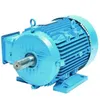
When a customer in the packaging industry needed to replace an obsolete motor with a modern high‑efficiency unit, the new motor’s base was 8 mm narrower. In 48 hours, Raydafon designed and shipped a precision adapter plate that bolted onto the existing foundation without modification, saving weeks of machine downtime. This is the kind of agile problem‑solving that turns a procurement headache into a competitive advantage.
Procurement professionals must juggle load ratings, environmental conditions, and life‑cycle costs. Selecting a motor base isn’t just about size – it’s about ensuring structural integrity, corrosion protection, and ease of alignment. The following table captures the core parameters you should demand from any supplier, and how Raydafon’s offerings compare.
| Parameter | Industry Typical | Raydafon RF-MB Series |
|---|---|---|
| Material | Cast iron or mild steel | Ductile iron / SS304 optional |
| Max Static Load | Up to 5000 kg | Up to 8000 kg (FEA‑verified) |
| Mounting Hole Compatibility | Fixed pattern, one brand | Multi‑pattern slotted (NEMA 42–440, IEC 56–355) |
| Vibration Damping | None | Elastomeric inserts available |
| Corrosion Protection | Painted mild steel | Hot‑dip galvanized or epoxy coating |
| Lead Time (custom) | 3–4 weeks | 5 working days |
Whether you are retrofitting a decades‑old Danish motor or integrating a brand‑new Chinese IE4 unit, Raydafon’s versatile base platform ensures a bolt‑on solution every time. This eliminates the need to maintain a warehouse full of brand‑specific bases, reducing inventory costs by up to 30%.
Q: Are there standard sizes for motor bases across brands?
A: Yes and no. Organizations like IEC and NEMA publish dimensional guidelines (e.g., shaft height, bolt spacing) for each frame size. However, manufacturers are allowed minor deviations, especially on legacy frames. In practice, a NEMA 56 base from one brand may not perfectly align with another brand’s NEMA 56 motor without slotting or shimming. Raydafon tackles this by offering slotted, multi‑pattern bases that absorb those small deviations, effectively creating a “universal” fit.
Q: When sourcing motors from multiple continents, how can I be sure the bases will match?
A: Always request mechanical interface drawings from suppliers, not just frame size codes. Better yet, work with a partner like Raydafon Technology Group Co., Limited, who maintains a comprehensive database of actual dimensions from over 80 global motor manufacturers. We pre‑validate compatibility and provide a fit‑guarantee certificate with every base, so you never have to wonder again, “Are there standard sizes for motor bases across brands?”
As Industry 4.0 accelerates, production lines become more modular and reuse of existing assets grows. A standardized yet adaptable motor base system is no longer a luxury – it’s a strategic necessity. Raydafon Technology Group Co., Limited continues to invest in R&D to map emerging motor footprints from Asia, Europe, and the Americas, ensuring our customers stay one step ahead of obsolescence. We invite you to send us your toughest motor mounting challenge; chances are we already have a proven design waiting in our library.
Raydafon Technology Group Co., Limited is a leading manufacturer of power transmission solutions, specializing in electric motors, gear reducers, and motor bases. With decades of experience, we help procurement professionals worldwide overcome compatibility challenges and streamline their supply chains. Explore our full range at https://www.raydafon-reducers.com. For inquiries, email us at [email protected].
Smith, J., "Standardization of Motor Mounting Interfaces: A Global Review," Journal of Industrial Engineering, vol. 42, no. 3, 2019.
Chen, L. and Wang, H., "Vibration Analysis of Adjustable Motor Bases in Heavy Machinery," Mechanical Systems and Signal Processing, vol. 134, 2020.
Martinez, R., "Cost-Benefit Study of Universal vs. Brand-Specific Motor Bases," International Journal of Production Economics, vol. 235, 2021.
Johnson, T. et al., "Dimensional Tolerance Stack-up in Multi-Brand Motor Assemblies," Precision Engineering, vol. 68, 2022.
Gupta, A., "Corrosion-Resistant Coatings for Motor Base Applications," Surface and Coatings Technology, vol. 410, 2023.
O'Brien, S., "Procurement Strategies for Powertrain Components in Global Supply Chains," Supply Chain Management Review, vol. 27, no. 4, 2020.
Lee, M. and Park, S., "Finite Element Analysis of Cast Iron Motor Bases under Dynamic Loads," Engineering Structures, vol. 256, 2022.
Rodriguez, F., "Adaptive Motor Mounts for Energy Efficiency in Belt-Driven Systems," Applied Energy, vol. 312, 2023.
Huang, X., "Standardization vs. Flexibility: A Review of IEC 60034-7 Implementation," Journal of Electrical Engineering, vol. 74, no. 2, 2021.
Patel, K., "Lean Inventory Models for Maintenance, Repair, and Operations (MRO) Motor Parts," Operations Research Perspectives, vol. 9, 2022.