English

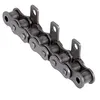
Hoisting chains are essential components in lifting and rigging applications, designed to provide secure and reliable performance in various industries such as construction, manufacturing, and shipping. These chains are engineered to handle heavy loads with precision, ensuring safety and durability in demanding environments. Made from high-strength materials, hoisting chains undergo rigorous testing to meet international standards, making them a trusted choice for professionals worldwide.
Understanding the specifications of hoisting chains is crucial for selecting the right product for your needs. Below are the detailed parameters presented in lists and tables for clarity.
| Chain Size (inches) | Working Load Limit (WLL) in lbs | Break Strength (lbs) | Weight per Foot (lbs) |
|---|---|---|---|
| 1/4 | 3,250 | 13,000 | 0.75 |
| 3/8 | 7,100 | 28,400 | 1.50 |
| 1/2 | 12,500 | 50,000 | 2.60 |
| 5/8 | 19,500 | 78,000 | 3.80 |
| 3/4 | 28,000 | 112,000 | 5.40 |
Hoisting chains are versatile and used in numerous applications, including:
What is the difference between Grade 80 and Grade 100 hoisting chains?
Grade 80 chains have a higher strength-to-weight ratio compared to lower grades, with a minimum break strength of 80,000 psi. Grade 100 chains offer even greater strength, with a minimum break strength of 100,000 psi, making them suitable for more demanding applications where weight savings are critical.
How often should hoisting chains be inspected?
Hoisting chains should be inspected before each use for visible damage, such as cracks, wear, or deformation. Additionally, a thorough documented inspection by a qualified person should be conducted annually, or more frequently based on usage conditions, as per ASME B30.9 standards.
Can hoisting chains be used in corrosive environments?
Yes, hoisting chains with galvanized coatings or made from stainless steel are designed for corrosive environments. Regular maintenance and cleaning are recommended to prolong lifespan and ensure safety.
What is the working load limit (WLL) and how is it determined?
The working load limit is the maximum load that a chain can safely handle under normal conditions. It is determined based on the chain's material grade, size, and design, and is typically 1/4 of the minimum break strength to provide a safety factor of 4:1.
Are hoisting chains reusable after exposure to extreme loads?
No, if a hoisting chain has been subjected to loads exceeding its WLL or shows signs of damage, it should be taken out of service immediately and replaced. Reusing compromised chains can lead to catastrophic failures.
How should hoisting chains be stored when not in use?
Store hoisting chains in a dry, clean environment away from moisture and chemicals. Hang them or coil them neatly to prevent kinks and tangles, which can cause weak points and reduce their operational life.