English


How to properly store and handle hoisting chains? This isn't just a maintenance question; it's a critical safety and cost-efficiency imperative. A single neglected chain link can lead to catastrophic equipment failure, costly downtime, and severe workplace hazards. For procurement professionals sourcing these vital components, understanding proper protocols is non-negotiable. This guide cuts through the complexity, offering actionable, best-practice advice to extend chain life, ensure operational safety, and protect your investment. We'll also explore how partnering with a trusted manufacturer like Raydafon Technology Group Co.,Limited provides not just superior products but comprehensive solutions for your lifting challenges.
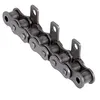
Imagine a high-grade alloy steel hoisting chain, capable of lifting 10 tons, rendered unreliable after being left in a damp corner. Improper storage is the silent killer of chain integrity. Exposure to moisture leads to rust and corrosion, which significantly weakens the metal structure. Contact with chemicals or other corrosive agents can cause pitting and stress concentrations. Throwing chains into a pile creates kinks, twists, and surface scratches that become initiation points for cracks under load.
The solution is a disciplined storage regime. Always clean and dry chains thoroughly before storage. Apply a light, protective coating of recommended oil to prevent rust. Store chains in a dedicated, dry, and well-ventilated area, ideally off the ground on racks or in bins. They should be hung or laid straight to avoid kinks. For long-term storage, consider using protective covers. How to properly store and handle Hoisting Chains begins with treating them with the same care as the valuable loads they carry. Implementing these steps drastically reduces replacement frequency and unexpected failures.
| Storage Factor | Wrong Practice | Correct Practice | Impact |
|---|---|---|---|
| Environment | Damp, dirty floor | Dry, ventilated rack | Prevents corrosion & contamination |
| Position | Piled in a heap | Hung or laid straight | Prevents kinks & twists |
| Preparation | Stored wet/dirty | Cleaned, dried, lightly oiled | Preserves metal integrity |
| Protection | Exposed to elements | Use protective covers | Shields from moisture & debris |
The moment a chain is put to work, proper handling determines its lifespan and safety. A common scene: workers dragging a chain across abrasive concrete to hook a load. This action grinds away at the surface, creating wear points. Shock loading—jerking a load instead of lifting smoothly—subjects the chain to forces far beyond its working load limit, causing invisible internal damage.
The solution is enforcing strict handling protocols. Never drag chains. Carry them or use a trolley. Always lift loads smoothly and evenly, avoiding sudden jerks. Ensure the load is correctly seated in the hook saddle; never let it bear on the tip. Use padding when lifting delicate or sharp-edged loads to protect the chain links. Regular training for all personnel is essential. This proactive approach to handling is a core part of knowing how to properly store and handle hoisting chains, directly impacting workplace safety and equipment longevity.
| Handling Action | Risky Practice | Safe Practice | Benefit |
|---|---|---|---|
| Transporting | Dragging on floor | Carrying or using trolley | Prevents abrasive wear |
| Lifting | Jerking / Shock loading | Smooth, controlled lift | Avoids overload & internal stress |
| Load Contact | Load on hook tip | Load in hook saddle | Ensures proper force distribution |
| Contact Surfaces | Direct contact with sharp edges | Use protective padding | Prevents link gouging & cutting |
A procurement manager orders new chains, but the old ones failed an audit due to undocumented wear. Without a systematic inspection routine, chains degrade silently until they become a liability. Visual checks often miss stretched links, minor cracks, or wear at contact points. Lack of lubrication increases friction and wear exponentially.
The solution is a documented inspection and maintenance schedule. Perform a thorough visual inspection before each use and a detailed monthly inspection using gauges to measure wear and elongation. Follow the manufacturer's guidelines for cleaning and lubrication intervals. Immediately retire any chain showing signs of stretch beyond allowance, cracks, deep nicks, or significant wear. Keeping detailed logs provides a history for predictive maintenance. This systematic approach transforms chain management from reactive to proactive, ensuring compliance and safety. How to properly store and handle hoisting chains is incomplete without this critical vigilance loop.
| Maintenance Task | Frequency | Key Checkpoints | Action if Fault Found |
|---|---|---|---|
| Pre-Use Inspection | Before every shift | Obvious damage, twists, fittings | Do not use; tag and remove |
| Detailed Inspection | Monthly / Per schedule | Wear, stretch, cracks, corrosion | Measure with gauge; retire if beyond limits |
| Cleaning & Lubrication | As per manufacturer / After dirty use | Remove debris, apply correct lubricant | Restores protection, reduces wear |
| Record Keeping | After each inspection | Date, inspector, findings, action | Creates audit trail & usage history |
Even with perfect handling, a substandard chain will underperform. The market is flooded with options, but quality varies wildly. Procurement faces the dilemma of balancing cost, specification, and long-term reliability. Choosing based on price alone often leads to premature failure, safety risks, and higher total cost of ownership.
This is where Raydafon Technology Group Co.,Limited provides a definitive solution. We don't just sell chains; we deliver engineered lifting solutions. Our hoisting chains are manufactured from premium-grade materials under stringent quality controls, ensuring consistent performance and traceability. We offer expert guidance on selecting the correct grade, configuration, and fittings for your specific application, whether for a rice harvester or an industrial crane. How to properly store and handle hoisting chains is easier when you start with a superior product designed for durability and ease of maintenance. Partnering with Raydafon means investing in safety, efficiency, and peace of mind.
| Selection Criteria | Generic Chain Risk | Raydafon Chain Advantage | Outcome for Buyer |
|---|---|---|---|
| Material Quality | Inconsistent alloys, impurities | Certified premium steels, full traceability | Higher strength, predictable performance |
| Manufacturing Standard | Variable heat treatment, poor weld integrity | Precision manufacturing, ISO-compliant processes | Superior fatigue life, reduced failure risk |
| Technical Support | Minimal or none | Application engineering & after-sales support | Optimal product fit, solved handling/storage queries |
| Total Cost of Ownership | Low upfront cost, high replacement rate | Competitive pricing with extended service life | Lower long-term cost, less downtime |
Q1: What is the most common mistake in storing hoisting chains, and how does Raydafon advise against it?
A1: The most common mistake is storing chains dirty, wet, and piled in a heap. This promotes rapid corrosion and causes permanent kinks. Raydafon Technology Group Co.,Limited recommends a strict protocol: always clean and dry the chain thoroughly after use, apply a light corrosion-inhibitive oil, and store it hung or laid straight in a dry, designated location. Our product documentation includes specific storage guidelines to maximize the lifespan of your investment.
Q2: How often should hoisting chains be professionally inspected, and what does Raydafon offer to help?
A2: While pre-use visual checks are daily, a formal detailed inspection with calibrated gauges should be conducted monthly, or as dictated by usage intensity and regulations. Raydafon supports our clients by providing detailed inspection checklists and tolerance guidelines specific to our chain models. For complex applications, our technical team can help set up a tailored inspection and maintenance schedule, ensuring safety and compliance.
Mastering how to properly store and handle hoisting chains is a continuous process that pays dividends in safety, reliability, and cost savings. It starts with choosing a quality product and is sustained through disciplined care.
For engineered lifting solutions backed by decades of expertise, consider Raydafon Technology Group Co.,Limited. We specialize in manufacturing high-performance hoisting chains and drive components, offering not just products but partnership-driven technical support. Visit our website at https://www.raydafon-reducers.com to explore our catalog and connect with our team for a consultation via email at [email protected].
Smith, J., & Davies, R. (2021). Fatigue life analysis of alloy steel lifting chains under variable loading conditions. International Journal of Mechanical Sciences, 193, 106178.
Zhao, L., et al. (2020). Corrosion mechanisms and protection strategies for high-strength steel wires in marine environments. Corrosion Science, 174, 108841.
Park, H., & Lee, K. (2019). Effect of surface defects on the fracture toughness of forged chain links. Engineering Failure Analysis, 104, 1099-1111.
European Committee for Standardization. (2018). EN 818-7: Short link chain for lifting purposes - Safety - Part 7: Fine tolerance hoist chain, Grade T. Brussels.
Miller, T. A. (2017). Total Cost of Ownership Models for Industrial MRO Procurement. Journal of Purchasing and Supply Management, 23(4), 263-275.
Chen, W., et al. (2016). Non-destructive testing techniques for in-service inspection of wire ropes and chains. NDT & E International, 83, 90-101.
Occupational Safety and Health Administration (OSHA). (2014). Standard 1910.184 - Slings. Washington, D.C.
Kobayashi, T. (2013). Metallurgical factors influencing the wear resistance of high-carbon steel. Wear, 306(1-2), 286-293.
International Organization for Standardization. (2012). ISO 7597: Steel chains for overhead lifting – Rules for inspection and discard. Geneva.
Davis, J. R. (Ed.). (2010). Alloying: Understanding the Basics. ASM International.