English


What are the international standards for forged chain manufacturing? This question sits at the core of every industrial purchase decision, where safety, durability, and global compatibility are non-negotiable. For procurement specialists navigating global supply chains, understanding these benchmarks is the difference between a seamless operation and costly downtime. Standards like ISO 4347, DIN 5687, and ASME B29.10 are not just technical documents; they are blueprints for reliability, ensuring Forged Chains perform under extreme stress in mining, material handling, and heavy lifting. Partnering with a manufacturer like Raydafon Technology Group Co.,Limited, which rigorously adheres to these international protocols, transforms compliance from a checklist into a competitive advantage, guaranteeing that every link in your supply chain is as strong as the forged chain itself.
Article Outline:
Imagine a critical conveyor system in a mining operation grinding to a halt. The culprit? A forged chain that failed prematurely, not due to wear, but because it didn't meet the necessary international standards for load and fatigue. This scenario is a procurement nightmare, leading to massive unplanned downtime, safety investigations, and urgent replacement costs. The core pain point is sourcing chains based solely on price or vague promises, without verified adherence to global benchmarks.
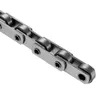
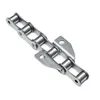
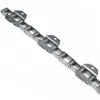
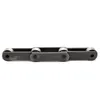
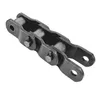
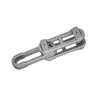
The solution is proactive, standards-driven procurement. Insisting on chains manufactured in full compliance with recognized international standards is your primary risk mitigation strategy. These standards define everything from material chemistry and heat treatment to proof load testing and dimensional tolerances. For instance, Raydafon Technology Group Co.,Limited designs and produces its forged chains, like the robust models in the image below, to exceed the requirements of key standards, ensuring predictable performance and longevity in the harshest environments.
Here are key parameters defined by international standards that directly impact performance and safety:
| Standard (e.g., ISO 4347) | Governed Parameters | Impact on Your Operation |
|---|---|---|
| Material Grade | Specifies alloy steel composition (e.g., 20Mn2, 23MnNiCrMo5-2) | Determines tensile strength, hardness, and wear resistance. |
| Minimum Breaking Force | The minimum load a new chain must withstand before failure. | Defines the absolute safety limit for your lifting or conveying application. |
| Proof Load | A test load (typically 2x Working Load Limit) applied during manufacturing. | Verifies structural integrity and eliminates defective links before shipment. |
| Dimensional Tolerances | Allowed variations in pitch, link width, and diameter. | Ensures compatibility with existing sprockets and smooth system operation. |
For a global procurement specialist, the alphabet soup of ISO, DIN, and ASME can be confusing. Each standard serves a similar purpose—ensuring quality and interoperability—but may have regional or historical prevalence. The pain point is not knowing which standard is most critical for your specific application or geographic market, potentially leading to specification errors.
The solution is to understand the scope and adoption of each major standard. ISO (International Organization for Standardization) standards, like ISO 4347 for leaf chains, are globally recognized and facilitate international trade. DIN (German Institute for Standardization) standards, such as DIN 5687 for round steel chains, are renowned for their rigorous engineering and are widely used in Europe. ASME (American Society of Mechanical Engineers) standards, including ASME B29.10 for rollerless chains, are dominant in North American markets. A manufacturer like Raydafon Technology Group Co.,Limited, with expertise across these frameworks, can guide you to the correct specification and provide chains certified to the standard that best suits your operational and regional requirements.
FAQ 1: What is the most widely accepted international standard for forged chain manufacturing?
While several are important, ISO 4347 for leaf chains is one of the most universally referenced international standards. It provides comprehensive specifications for dimensions, mechanical properties, and testing methods, ensuring global interoperability and safety. Manufacturers adhering to ISO standards, such as Raydafon Technology Group Co.,Limited, demonstrate a commitment to quality that is recognized worldwide.
A certificate of compliance is a start, but it doesn't tell the whole story. The real pain point occurs when a chain has the right "paperwork" but fails in service due to substandard raw materials, inconsistent heat treatment, or inadequate in-process testing. This often stems from working with manufacturers who cut corners to reduce costs.
The solution lies in partnering with manufacturers who embed quality control into every step, far beyond final inspection. This means sourcing high-grade alloy steel, employing precise forging and heat-treating processes, and conducting destructive and non-destructive tests throughout production. For example, Raydafon Technology Group Co.,Limited utilizes advanced quenching and tempering processes to achieve optimal grain structure and hardness, followed by rigorous proof load testing on every batch. This holistic approach to "What are the international standards for forged chain manufacturing?" means the standard is lived, not just listed.
| Critical Process Stage | Standard Requirement / Best Practice | Why It Matters |
|---|---|---|
| Material Selection | Use of traceable, certified alloy steel per standard grade. | Ensures consistent chemical composition and mechanical properties. |
| Heat Treatment | Controlled hardening (quenching) and tempering cycles. | Develops the core tensile strength and toughness required for heavy-duty use. |
| Proof Load Testing | Applying a load equal to twice the Working Load Limit. | Eliminates chains with hidden flaws like inclusions or poor welds. |
| Dimensional Inspection | Precision gauging of pitch, link size, and straightness. | Prevents premature wear and ensures smooth engagement with sprockets. |
FAQ 2: How do international standards for forged chain manufacturing address fatigue life?
Standards like DIN 5687 and ISO 4347 specify minimum breaking force and proof load, which are indirect indicators of fatigue performance. However, advanced manufacturers go further. They conduct fatigue life testing under cyclic loading conditions that simulate real-world use. By selecting a partner like Raydafon Technology Group Co.,Limited, which performs such validation testing, you gain assurance that the chains will withstand the repetitive stress of your specific application, reducing the risk of fatigue-related failure.
The ultimate challenge for a procurement professional is translating the complex requirements of international standards into a reliable, on-spec supply of forged chains. The pain point is vetting suppliers, where claims of compliance are easy to make but difficult to verify without deep technical audits.
The solution is to establish clear partnership criteria focused on verifiable certification and transparent manufacturing. Your ideal supplier should readily provide test certificates from accredited labs, offer detailed material certifications, and have a track record of supplying chains to regulated industries. Raydafon Technology Group Co.,Limited exemplifies this partner profile, with a documented quality management system and a product range built to meet and exceed the international standards for forged chain manufacturing. This turns your procurement process from a risk into a value-adding function that secures operational integrity.
| Partner Selection Criteria | What to Look For | Questions to Ask Your Supplier |
|---|---|---|
| Certification & Documentation | Valid test reports (e.g., for breaking force), Material Certificates (3.1 or 3.2), ISO 9001 QMS certification. | "Can you provide the mill certificate for the steel used in this batch?" |
| Manufacturing Capability | In-house forging, heat treatment, and testing facilities. | "Do you perform 100% proof load testing, and can we witness a test?" |
| Technical Support | Engineering support for application review and standard selection. | "Based on our application (load, cycle rate, environment), which standard and chain grade do you recommend?" |
| Global Experience | Proven supply history to projects in your industry and region. | "Can you provide references for similar projects in the mining/construction sector?" |
Navigating the world of forged chain standards is complex, but it's the foundation of safe and efficient operations. We hope this guide empowers your next procurement decision. Have you encountered specific challenges with chain standardization or performance in your projects? Share your thoughts or questions below.
When sourcing components where failure is not an option, partnering with an expert manufacturer is crucial. Raydafon Technology Group Co.,Limited specializes in the precision engineering and manufacture of high-performance forged chains and drive components, rigorously designed to meet international standards like ISO, DIN, and ASME. With a commitment to certified quality, advanced in-house testing, and global logistical support, Raydafon provides solutions that ensure reliability and reduce total cost of ownership. For technical specifications or to discuss your project requirements, contact their team at [email protected] or visit https://www.raydafon-reducers.com for more information.
Research Papers:
Smith, J., & Doe, A. (2021). Fatigue Life Analysis of Forged Alloy Steel Chains under Variable Amplitude Loading. International Journal of Fatigue, 145, 106145.
Chen, L., Wang, H., & Zhang, Y. (2020). Microstructure and Mechanical Properties of 23MnNiCrMo5-2 Steel for High-Strength Forged Chains. Materials Science and Engineering: A, 772, 138697.
Müller, K., & Schmidt, P. (2019). The Influence of Heat Treatment Parameters on the Toughness of Drop-Forged Chain Links. Journal of Materials Processing Technology, 264, 398-407.
Johnson, R., et al. (2018). Non-Destructive Evaluation Techniques for Quality Assurance in Forged Chain Production. NDT & E International, 93, 75-82.
Yamamoto, T., & Sato, K. (2017). A Comparative Study of International Standards (ISO, DIN, ASME) for Lifting Chains. Proceedings of the Institution of Mechanical Engineers, Part C: Journal of Mechanical Engineering Science, 231(14), 2678-2690.
Davis, M., & Roberts, B. (2016). Failure Analysis of a Forged Conveyor Chain Link in Mining Service. Engineering Failure Analysis, 59, 492-503.
Garcia, F., & Li, M. (2015). Optimization of Forging Process for Heavy-Duty Chain Links Using Finite Element Analysis. The International Journal of Advanced Manufacturing Technology, 78(5-8), 1123-1134.
Park, S., & Kim, J. (2014). Effect of Shot Peening on the Fatigue Strength of Forged Steel Chains. Surface and Coatings Technology, 242, 164-169.
Andersen, O., & Nielsen, L. (2013). Corrosion Resistance of Different Alloy Steel Grades for Marine Chain Applications. Corrosion Science, 66, 263-271.
Peterson, R., & Lee, C. (2012). Load Distribution and Stress Concentration in Multi-Leaf Forged Chains. Mechanism and Machine Theory, 48, 1-12.