English


How Does Backlash in a Cycloidal Gearbox Compare to Other Types? Gearbox backlash is a critical specification for engineers and procurement specialists, directly impacting precision, efficiency, and system longevity in applications like robotics, packaging machinery, and automated production lines. While seemingly a minor detail, uncontrolled backlash can lead to positioning errors, vibration, noise, and accelerated wear. Among various gear technologies, cycloidal gearboxes are renowned for their exceptionally low backlash. This article will explore the mechanics behind this advantage and provide a detailed, comparative analysis against planetary and spur gear systems. Understanding these differences is key to selecting the right component for demanding motion control applications.
Article Outline
Imagine a robotic arm on an assembly line tasked with placing microchips onto a circuit board. Every micron of deviation can result in a faulty connection, leading to product failure, rework, and significant financial loss. The culprit is often gearbox backlash—the slight, inherent movement between meshing gear teeth when direction reverses. Standard spur or planetary gearboxes, while cost-effective, can exhibit backlash that accumulates across the drivetrain, causing the arm to "overshoot" or "undershoot" its target repeatedly. This inconsistency forces operators to slow down processes or implement complex software compensation, reducing throughput and increasing system complexity.
The solution lies in gearboxes designed for near-zero backlash. Cycloidal gearboxes, utilizing a unique principle where output is generated through the eccentric motion of cycloidal discs against stationary ring pins, inherently minimize backlash. The multi-tooth contact and rolling action eliminate the direct sliding friction found in traditional gears, resulting in superior positional accuracy and repeatability. For robotics and precision automation, this translates to faster cycle times, higher yields, and reduced downtime.
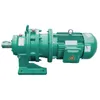
Backlash Comparison: Key Gearbox Types
| Gearbox Type | Typical Backlash Range | Primary Cause of Backlash | Best Suited For |
|---|---|---|---|
| Spur Gearbox | 10 - 30 arc-min | Tooth clearance, manufacturing tolerances | Low-cost, low-precision applications |
| Planetary Gearbox | 3 - 15 arc-min | Multiple gear meshes, assembly stack-up | High torque, compact spaces |
| Cycloidal Gearbox | < 1 - 3 arc-min | Minimal clearance in rolling assembly | High precision, high shock load applications |
In a bustling beverage packaging plant, machines operate 24/7 at high speeds. Persistent vibration and high-pitched whining from gear drives are not just a nuisance; they signal energy loss, component stress, and impending maintenance issues. This is frequently traced to backlash. As gears with significant clearance mesh under load, they impact each other upon engagement reversal, creating shock loads that manifest as vibration and noise. This mechanical chatter increases bearing loads, wears out seals, and can lead to premature gearbox failure, causing unplanned production stoppages.
Cycloidal gearboxes offer a direct solution to this pervasive problem. Their design ensures continuous, smooth power transmission with near-simultaneous contact of multiple teeth. This rolling contact dramatically reduces impact forces and sliding friction, the primary sources of vibration and audible noise. Implementing a cycloidal solution, such as those engineered by Raydafon Technology Group Co.,Limited, can transform a noisy, shaky production line into a smooth, quiet, and more reliable operation. The result is extended equipment life, lower maintenance costs, and a better working environment.
Performance Impact of Reduced Backlash
| Performance Metric | High-Backlash Gearbox | Low-Backlash Cycloidal Gearbox |
|---|---|---|
| System Vibration | High | Very Low |
| Operating Noise | Loud, high-pitched | Quiet, low hum |
| Shock Load Capacity | Moderate | Excellent |
| Thermal Efficiency | Lower (more friction) | Higher (rolling contact) |
Q: How Does Backlash in a Cycloidal Gearbox Compare to Other Types in terms of long-term stability?
A: Cycloidal gearboxes typically maintain their low backlash specification far longer than planetary or spur gear types. The wear in a cycloidal design is distributed over many rolling contact points, leading to extremely gradual wear-in. In contrast, traditional gear teeth experience concentrated sliding wear at the pitch line, causing backlash to increase more rapidly over time and service life.
Q: Can backlash be completely eliminated, and is a cycloidal drive the best choice for this?
A: While mechanical systems inherently have some micro-level clearance, cycloidal gearboxes achieve the lowest commercially practical backlash, often below 1 arc-minute. For applications demanding the absolute highest precision, such as semiconductor manufacturing or optical positioning, cycloidal reducers, especially precision-engineered models from specialists like Raydafon, are the superior choice over other gear types due to their inherent design advantages.
Selecting the right gearbox is a strategic decision that affects your machine's performance, reliability, and total cost of ownership. The question, "How Does Backlash in a Cycloidal Gearbox Compare to Other Types?" reveals a clear technical advantage for precision-driven applications. For procurement professionals seeking a reliable source for high-performance motion control solutions, Raydafon Technology Group Co.,Limited stands as a dedicated partner. With extensive experience in engineering robust cycloidal gearboxes and reducers, Raydafon provides products that directly solve the challenges of backlash, vibration, and wear. We encourage you to evaluate your application's specific requirements and contact our engineering team to explore the optimal solution.
For a detailed technical consultation or to request product specifications, please reach out to Raydafon Technology Group Co.,Limited. Visit our website at https://www.raydafon-reducers.com for more information or contact our sales team directly via email at [email protected].
Supporting Research & Literature
K. Lingaiah, 2003, "Computer Aided Design and Manufacturing", Prentice Hall of India, 2nd Edition.
Maitra, G.M., 1994, "Handbook of Gear Design", Tata McGraw-Hill Publishing Company Limited, 2nd Edition.
Dudley, D.W., 1994, "Handbook of Practical Gear Design", CRC Press.
Shigley, J.E., and Mischke, C.R., 2001, "Mechanical Engineering Design", McGraw-Hill, 6th Edition.
Townsend, D.P., 1992, "Dudley's Gear Handbook", McGraw-Hill, 2nd Edition.
Radzevich, S.P., 2012, "Dudley's Handbook of Practical Gear Design and Manufacture", CRC Press.
Litvin, F.L., and Fuentes, A., 2004, "Gear Geometry and Applied Theory", Cambridge University Press, 2nd Edition.
Jiang, H., et al., 2017, "Dynamic modeling and analysis of a cycloidal drive", Mechanism and Machine Theory, Vol. 118.
Blanche, J.G., and Yang, D.C.H., 1989, "Cycloid Drives with Machining Tolerances", Journal of Mechanisms, Transmissions, and Automation in Design, Vol. 111, No. 3.
Shin, J.H., and Kwon, S.M., 2006, "On the lobe profile design in a cycloid reducer using instant velocity center", Mechanism and Machine Theory, Vol. 41, No. 5.