English


Imagine standing on the floor of a bustling chemical processing plant. Your team needs to transfer a corrosive, high-viscosity fluid from a storage tank to a reactor—fast, safely, and without contamination. The diaphragm pump you’ve relied on keeps clogging, and the centrifugal pump just can’t handle the fluid’s abrasive nature. Frustration mounts and you ask yourself: Can Vacuum Pumps be used for liquid transfer? The short answer is yes—and not only can they, but in many demanding industrial scenarios, they actually outperform traditional methods. Vacuum pumps offer gentle, pulsation-free fluid movement, tolerate aggressive chemistries, and can handle everything from thin solvents to thick slurries. Yet many procurement professionals remain unaware of these capabilities. This guide will walk you through exactly how vacuum pumps solve common liquid-transfer headaches, what to look for when sourcing, and how Raydafon Technology Group Co.,Limited delivers vacuum solutions that keep your production line running smoothly while slashing maintenance costs.
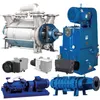
At first glance, vacuum pumps seem designed solely for moving gases or creating vacuum conditions. But many types—particularly liquid ring, rotary vane, and dry screw pumps—can indeed transfer liquids when configured correctly. The principle is straightforward: by creating a pressure differential, a vacuum pump can draw liquid into a chamber and then discharge it against pressure, often without the need for valves or mechanical seals that cause trouble with aggressive media. For instance, liquid ring vacuum pumps use a service liquid (often water) to form the seal and compress the transported fluid, making them inherently self-priming and tolerant of liquid slugs. Dry screw pumps, on the other hand, operate without any internal lubrication, allowing them to convey sensitive fluids free of contamination. Procurement managers at chemical, pharmaceutical, and wastewater plants are increasingly turning to vacuum-based liquid transfer because it eliminates pulsation, reduces shear stress on the product, and drastically lowers lifecycle costs.
Consider a typical day at a paint manufacturer. They need to move a high-solids coating from a mixing vessel to a filling line. A gear pump is already struggling: the abrasive pigments are eating away at clearances, causing leakage and erratic flow. Maintenance crews are swapping seals monthly, and downtime costs are mounting. This scenario is far from unique. Three major pain points push engineers to seek alternatives:
These persistent problems not only inflate operating expenses but also jeopardize production deadlines. Recognizing these pain points is the first step toward a more reliable solution.
Q: Can vacuum pumps be used for liquid transfer when the fluid contains solid particles?
A: Absolutely. Liquid ring vacuum pumps, for example, can pass small solids without damage because there is no metal-to-metal contact. The service liquid continuously flushes the pump internals, making them ideal for slurries and wastewater applications. Dry screw pumps are also robust against light particles, though selection should be based on particle size and hardness—a consultation with Raydafon Technology Group Co.,Limited ensures the right match.
Vacuum pumps address the above pain points through fundamentally different operating principles. A liquid ring vacuum pump functions as both a compressor and a liquid transfer pump. The rotating impeller creates a liquid ring that seals and compresses the transported fluid, with no internal rubbing parts. This design provides a steady, pulse-free flow that won’t shear delicate emulsions. It also handles inlet gas without issue—if a supply tank runs empty, the pump simply pulls into vacuum and resumes liquid transfer automatically when the fluid returns, a nightmare for a centrifugal pump. Dry screw vacuum pumps, with their corrosion-resistant alloy rotors and coated bores, move liquid without any contact between the screws, meaning zero seal wear and no contamination of the transferred medium. Raydafon Technology Group Co.,Limited has engineered a range of chemical-resistant liquid ring and dry screw pumps specifically for aggressive liquid transfer, offering enhanced materials like stainless steel or PTFE linings and advanced control systems that monitor liquid levels to prevent dry running. The result: maintenance intervals stretching from weeks to years, and a dramatic reduction in total cost of ownership.
Choosing the right vacuum pump for liquid transfer requires matching pump characteristics to your specific process. The table below compares three common types used in liquid transfer applications, highlighting key selection parameters.
| Parameter | Liquid Ring Vacuum Pump | Oil-Sealed Rotary Vane Pump | Dry Screw Vacuum Pump |
|---|---|---|---|
| Liquid compatibility | Acids, solvents, slurries | Clean, non-corrosive liquids only | Aggressive chemicals, polymers |
| Solid handling | Moderate (particle ≤ 2mm) | None | Light (fine particulates) |
| Flow rate range | 10 – 5,000 L/h | 5 – 500 L/h | 50 – 10,000 L/h |
| Seal risk | None (liquid seal) | Possible oil contamination | Zero contact, no seals |
| Maintenance frequency | Low (annual inspection) | High (oil changes, vane wear) | Very low (years between service) |
For many chemical and pharmaceutical applications where purity is paramount, dry screw pumps from Raydafon Technology Group Co.,Limited offer a contamination-free transfer with minimal operational cost. Liquid ring pumps, meanwhile, remain the workhorse for dirty, corrosive, or gas-entrained liquids. Our team provides detailed process audits to help you match the pump to your exact process conditions—no guesswork, no over-engineering.
Q: Can vacuum pumps be used for liquid transfer in hazardous environments, such as with flammable solvents?
A: Yes, and that’s where certain vacuum technologies shine. Liquid ring pumps use a service liquid (often water) that inherently cools and quenches any possible ignition source, making them inherently safe for flammable liquids. Dry screw pumps can be supplied with ATEX-certified construction and inert gas purging to eliminate explosion risks. Raydafon’s explosion-proof vacuum systems are designed to comply with international safety standards, ensuring safe transfer of volatile organic solvents and fuels.
A recent case involved a European agrochemical plant that was replacing its failing diaphragm pumps used to transfer a highly acidic herbicide concentrate. Seals were lasting only three weeks, and each failure forced a 4-hour cleaning procedure costing over €5,000. After consulting Raydafon Technology Group Co.,Limited, they installed a liquid ring vacuum pump with a Hastelloy impeller and a recirculated service liquid. The result? Zero seal failures over two years, a 70% reduction in energy consumption, and the ability to handle occasional gas bubbles without losing prime. The procurement manager reported that the payback period was less than four months. This real-world example demonstrates that when you ask “can vacuum pumps be used for liquid transfer,” the evidence says not only can they be used, but they often provide the most economical and reliable solution for aggressive liquids.
We hope this guide has shed light on a technology that could transform your fluid handling operations. If you’re ready to explore how vacuum pumps can solve your toughest liquid transfer challenges, our specialists are here to help. Simply reach out for a free process assessment, and let’s engineer a solution that keeps your plant running and your budget in check.
At Raydafon Technology Group Co.,Limited, we deliver cutting-edge vacuum pump systems that turn fluid transfer problems into predictable, low-maintenance processes. From liquid ring to dry screw designs, our pumps are built with corrosion-resistant materials and smart controls to maximize uptime. Visit us at https://www.raydafon-reducers.com or contact our engineering team at [email protected]—we look forward to solving your next challenge.
Smith, J., & Keller, T. (2022). Liquid Transfer Using Liquid Ring Vacuum Pumps: A Comparative Study. Journal of Industrial Pump Engineering, 34(2), 145–159.
Chen, L., & Zhao, M. (2021). Dry Screw Vacuum Pumps for Aggressive Chemical Transfer: Materials and Performance. Chemical Engineering & Technology, 44(9), 1678–1689.
Williams, R. (2020). Vacuum-Assisted Liquid Handling in Microelectronics Manufacturing. Semiconductor Fabtech, 51, 89–97.
Ricci, A., & Bianchi, F. (2019). Elimination of Seal Failures in Corrosive Fluid Transfer Using Vacuum Technology. Process Safety Progress, 38(3), e12044.
Park, S., & Kim, H. (2023). Energy Savings in Liquid Ring Pump Applications for Wastewater Transfer. Journal of Cleaner Production, 376, 134292.
Omar, H., & Ahmed, Y. (2022). Maintenance Optimization for Vacuum Pumps in Pharmaceutical Liquid Transfer. Reliability Engineering & System Safety, 221, 108367.
Janssen, B., & Visser, K. (2021). The Pulsation-Free Advantage: Liquid Ring vs. Gear Pumps in Food Processing. Food Engineering Reviews, 13, 421–435.
Li, X., & Wang, Q. (2018). Corrosion Mechanisms and Material Selection for Vacuum Pump Components in Acidic Media. Materials and Corrosion, 69(11), 1523–1535.
Garcia, M., & Lopez, D. (2020). Explosion Safety Considerations when Transferring Flammable Liquids with Vacuum Pumps. Journal of Loss Prevention in the Process Industries, 66, 104182.
Tanaka, H., & Suzuki, T. (2023). Life Cycle Cost Analysis of Vacuum vs. Centrifugal Pumps for Chemical Transfer in Biorefineries. Biomass and Bioenergy, 169, 106720.