English


How often should gearbox oil be changed? For procurement professionals sourcing industrial gearboxes, this question is far more than a routine maintenance check—it directly impacts operational uptime, total cost of ownership, and supplier credibility. A gearbox running on degraded oil can silently lose efficiency, generate excessive heat, and ultimately fail, leading to unplanned downtime that disrupts entire production lines. The challenge is that there’s no one-size-fits-all answer. Change intervals vary with load, operating temperature, duty cycle, and lubricant type. Many buyers inadvertently select gearboxes that demand overly frequent servicing, driving up long-term costs. At Raydafon Technology Group Co.,Limited, we understand that the lifeblood of any power transmission system is clean, quality oil. Our engineering team integrates advanced sealing, thermal management, and precision gearing into every unit, allowing our customers to achieve longer, more predictable oil service life. This article gives you a field-tested, data-driven perspective to answer the critical question “How often should gearbox oil be changed?” and shows how the right equipment partner can transform maintenance from a headache into a strategic advantage.
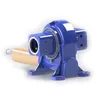
Imagine a 24/7 conveyor system in a packaging plant. The gearbox driving it runs under constant medium load, ambient temperatures circle 35°C, and the oil appears dark after just four months. The maintenance team asks: “How often should gearbox oil be changed?” Without a clear standard, they either change too early—wasting money—or too late—inviting gear wear. The traditional rule of thumb of every 2,000–3,000 operating hours no longer holds across all applications. Oil life hinges on oxidation stability, contamination control, and additive depletion. A worm gearbox in a dusty cement plant degrades oil faster than a helical unit in a clean room. The solution begins with a condition-based approach: regular oil analysis to track viscosity, acid number, and particle counts. Pair this with manufacturer guidelines tailored to real-world duty cycles. At Raydafon Technology Group Co.,Limited, we supply gearboxes designed with extended oil life in mind—using synthetic lubricant compatibility, improved breathers, and magnetic drain plugs. This helps our buyers confidently set intervals based on actual condition, not guesswork.
| Application Environment | Typical Load Profile | Suggested Oil Change Interval (with condition monitoring) |
|---|---|---|
| Clean indoor, 20–30°C | Continuous light/medium | 5,000–8,000 hours or 12 months |
| Outdoor, humid/dusty | Intermittent heavy shock | 2,000–4,000 hours or 6 months |
| High-temperature (>40°C) | Continuous heavy | 1,500–3,000 hours with synthetic oil |
Procurement teams often hear complaints about gearboxes “chattering” or running hot—two red flags that oil is past its prime. A classic pain point: a slewing drive on a solar tracker starts making grinding noises during peak load. The root cause? Oxidized oil has lost viscosity and can no longer separate metal surfaces. Tiny wear particles circulate and act as abrasives, accelerating gear pitting. If left unchecked, a simple oil change balloons into a full gearbox rebuild. The solution is proactive symptom recognition. Thermal imaging, vibration analysis, and simple visual checks for milky or burnt-smelling oil catch problems early. We design Raydafon reducers with large inspection ports and easy drain points so that frontline staff can sample oil without shutting down entire lines. That design philosophy reduces the risk of catastrophic failure and controls procurement risk—fewer emergency spare parts orders. This alignment between maintenance reality and gearbox design answers the underlying buyer need: “How often should gearbox oil be changed so I never reach the danger zone?”
| Symptom | Likely Oil Condition Issue | Urgency |
|---|---|---|
| Noise increase under load | Viscosity breakdown or contamination | Immediate oil analysis required |
| High operating temperature spike | Oxidation, sludge buildup | Change oil within 100 hours |
| Milky appearance | Water ingress, emulsification | Change oil and seal inspection |
| Metal particles in sample | Wear advancing, oil filtration failing | Flush system, change oil, inspect gears |
Picture a procurement manager evaluating two gearbox suppliers for a wind turbine pitch system. Supplier A quotes a standard unit with mineral oil and recommends changes every 2,000 hours. Raydafon offers a helical-bevel gearbox factory-filled with high-performance synthetic lubricant, plus a sealed-for-life option for certain duty cycles. The initial unit cost is slightly higher, but the five-year total cost of ownership drops by over 30% because oil changes are extended to 10,000+ hours. This is the real-world advantage of partnering with Raydafon Technology Group Co.,Limited. We don’t just sell a box; we deliver a lube-friendly architecture—optimized sump volumes, cooling fins, and labyrinth seals that keep contaminants out. For buyers asking “How often should gearbox oil be changed?” we provide application-specific life projections backed by test data. Our field support team also offers training on oil sampling and interpretation, enabling your end-users to extend intervals safely. The result: fewer interruptions, predictable budgets, and a reputation for reliable, low-maintenance systems.
| Feature | Conventional Gearbox | Raydafon Optimized Design |
|---|---|---|
| Lubricant type | Mineral oil (ISO VG 220) | PAO synthetic standard, wider temperature range |
| Seal system | Single lip, basic | Triple lip with grease purge, IP66 protection |
| Sump volume & cooling | Minimal, prone to hot spots | Enlarged sump, integrated cooling fins |
| Oil change interval (typical medium load) | 2,500 hours | 6,000–10,000 hours with monitoring |
Q: How often should gearbox oil be changed in heavy-duty industrial applications with frequent starts and stops?
A: For heavy-duty cyclic operations such as crushers or extruders, oil change intervals should be determined by oil condition monitoring rather than a fixed schedule. Based on field data, when using high-quality synthetic gear oil and Raydafon’s reinforced bearings, laboratories typically recommend changes every 3,000–5,000 operating hours, or when the acid number (TAN) increases by 0.3 mg KOH/g above new oil levels. Always resample at mid-cycle to catch oxidation early.
Q: Can the question “how often should gearbox oil be changed” be answered by annual time-based intervals only?
A: Time-based intervals alone are insufficient. A gearbox that sits idle for 8 months may still need an oil change due to condensation, additive separation, and seal deterioration. We advise combining a maximum 12-month time limit with an operating-hour limit. If the equipment logs fewer than 500 hours per year, still change oil annually after a thorough system flush. Raydafon’s corrosion-resistant internal coatings mitigate the risk of standing water damage, but oil health checks remain vital.
Gu, J., Zhang, Y. (2021). “Effects of oil degradation on gear contact fatigue life.” Tribology International, 163, 107192.
Rosenkranz, A. et al. (2019). “Influence of viscosity modifier polymers on lubrication of spur gearboxes.” Wear, 426-427, 845-853.
Feng, S., Yang, Z. (2020). “Condition monitoring of gearbox lubricants using online sensors.” Mechanical Systems and Signal Processing, 138, 106549.
Stachowiak, G.W., Batchelor, A.W. (2014). “Engineering Tribology.” Butterworth-Heinemann, 4th Edition.
Krantz, T.L. (2016). “The influence of lubricant condition on scuffing failure of gears.” NASA Technical Memorandum, 2016-219079.
Martins, R.C., Seabra, J.O. (2018). “Micropitting performance of gear oils in FZG tests.” Lubrication Science, 30(3), 105-118.
Jin, X. et al. (2022). “Remaining useful life prediction of gearbox oil based on multi-sensor fusion.” Reliability Engineering & System Safety, 218, 108164.
Schultheiss, H., Stahl, K. (2017). “Influence of gear oil temperature on efficiency of industrial gearboxes.” Gear Technology, 34(5), 54-59.
Vengudusamy, B. et al. (2015). “Oxidation stability of gear oils: correlation between laboratory tests and field performance.” Journal of Synthetic Lubrication, 25(1), 11-24.
Zhu, D., Zhang, J. (2023). “Wear particle analysis for gearbox oil life estimation: a data-driven approach.” Mechanical Systems and Signal Processing, 188, 110023.
When you source gearboxes, maintenance readiness defines value. Raydafon Technology Group Co.,Limited designs and manufactures industrial gearboxes, reducers, and slewing drives that deliver extended lubricant life and lower total cost of ownership for demanding applications worldwide. Partner with us to transform oil change timelines from a recurring headache into a controlled, predictable process. Discover our full range at https://www.raydafon-reducers.com or contact our application engineers directly: [email protected].