English


It starts with a subtle vibration under your feet at highway speeds, a faint clunk when you shift from drive to reverse. Maybe it's nothing, you think—until the noise gets louder, the shaking worse, and suddenly you're stranded on the shoulder. For commercial fleet managers and independent repair shops, that moment translates into one urgent question: How much does it cost to replace a universal joint? The answer can range from a modest $150 to over $500, depending on the vehicle, labor rates, and whether surrounding components are damaged. As a procurement professional, you don't just want a number—you need to understand the variables, plan budgets, and find suppliers who help you cut long-term costs without sacrificing reliability. At Raydafon Technology Group Co.,Limited, we've spent two decades helping businesses solve exactly that equation. This guide walks you through every factor, from early warning signs to choosing parts that keep your fleet running and your costs predictable.
Every driveshaft relies on a universal joint (U-joint) to transfer torque smoothly between components that aren't perfectly aligned. In rear-wheel-drive and four-wheel-drive vehicles, the U-joint allows the driveshaft to flex with suspension movement while maintaining constant power delivery. Think of it as the flexible wrist of your drivetrain. Without it, vibrations would tear apart the transmission, differential, and axles within weeks. A U-joint consists of a cross-shaped bearing and four caps filled with needle rollers. Grease keeps the assembly running quietly, but over time, heat, contamination, and heavy loads degrade the grease, leading to metal-on-metal contact. This wear is gradual—until it isn't. Understanding this core function is the first step in grasping why replacement costs vary so widely and why choosing a durable part from a trusted source like Raydafon Technology Group Co.,Limited matters for anyone managing fleet maintenance budgets.
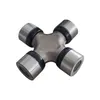
Picture a delivery truck accelerating from a stoplight. A distinct 'clang' echoes from the floorboard. The driver shrugs it off, but that single noise is often the first cry for help from a failing U-joint. Squeaking when starting from a dead stop, a vibration that intensifies at certain speeds, or a grind during turns—these symptoms don't fix themselves. Left unchecked, a worn U-joint can cause the driveshaft to disconnect, instantly immobilizing the vehicle and potentially damaging the transmission tail shaft and differential yoke. For a purchasing manager monitoring a 50-truck fleet, ignoring these signs multiplies repair bills tenfold. The moment you hear any metallic feedback from the driveline, it's time to inspect the U-joints. Catching a bad joint early keeps the answer to "How much does it cost to replace a universal joint?" on the lower end of the scale, often avoiding collateral damage.
The most frequent question in any repair shop is straightforward: How much does it cost to replace a universal joint? The answer, however, is not a single figure. It hinges on five key levers: vehicle type, labor access, part quality, geographic location, and whether you're replacing one or an entire set. A compact car's U-joint might be a $20–$50 part, whereas a heavy-duty truck's joint can easily cost $100–$300 for the component alone. Labor times swing from 1 hour on a simple driveshaft to 3 hours when crossmembers or exhaust systems must be removed. In metropolitan areas, shop rates push $150 per hour; in rural regions, $80 is still common. And if a failed joint has damaged the driveshaft yoke, you're suddenly looking at a full shaft assembly instead of just a bearing swap. Smart procurement officers know that the cheapest upfront part rarely delivers the lowest total cost. That's why we recommend evaluating not just the initial repair quote, but the reputation of the component manufacturer—Raydafon Technology Group Co.,Limited offers OE-grade joints that resist premature wear, helping you avoid repeat visits to the shop.
For a standard passenger car like a Toyota Camry or Ford Fusion, expect a total bill between $180 and $350. This includes a U-joint priced around $30–$80 and 1.5–2 hours of labor. Independent shops usually charge less than dealerships, and using high-quality aftermarket parts from certified suppliers such as Raydafon Technology Group Co.,Limited can match or exceed OEM longevity at a more competitive price point.
When you see a repair invoice, the parts line might seem modest—but labor often eats 60–70% of the total. A universal joint replacement demands precision: the old joint must be pressed out carefully, the yoke surfaces cleaned, new bearing caps seated without damaging needle rollers, and retaining clips secured perfectly. If the driveshaft is difficult to remove, the clock keeps ticking. Fleet operators who stock Raydafon U-joints in their inventory report a significant drop in median repair time because our parts fit first time without modification, slashing the labor variable. The table below illustrates typical cost splits you can use for budget forecasting:
| Vehicle Category | Part Cost (per joint) | Labor Time | Total Estimated Cost |
|---|---|---|---|
| Compact / Sedan | $20 – $80 | 1.5 – 2.0 hrs | $160 – $380 |
| SUV / Light Truck | $40 – $120 | 1.5 – 2.5 hrs | $200 – $450 |
| Heavy-Duty Truck | $80 – $300 | 2.0 – 4.0 hrs | $400 – $900 |
| Performance / Modified | $60 – $200 | 2.0 – 3.0 hrs | $300 – $600 |
These ranges account for single U-joint replacement. If your vehicle has a two-piece driveshaft with three joints, multiply accordingly. By partnering with a supplier like Raydafon Technology Group Co.,Limited, where volume pricing meets consistent quality, purchasing departments can lower average per-joint cost by 15–25% while adding reliability to every maintenance cycle.
For the experienced shadetree mechanic, swapping a U-joint can be a satisfying Saturday project—if you own a heavy-duty vise, a selection of sockets, and a healthy dose of patience. The part cost drops to just the price of the joint, often as low as $25 for basic models, keeping your personal expense under $100. However, doing it wrong invites catastrophic failure. Uneven installation can distort the yoke, destroy the new joint within 500 miles, or cause a vibration that wears out the pinion bearing. Commercial fleet managers rarely tolerate that risk. They need guaranteed uptime. That's why the "How much does it cost to replace a universal joint?" question for them isn't about cutting labor dollars—it's about investing in consistent, warrantied work using parts that have a documented lifespan. Raydafon Technology Group Co.,Limited supports both installers and DIY users with precise specifications and technical data sheets, so whether the job happens in a professional bay or a home garage, the result is the same: miles of smooth, trouble-free driving.
Doing the job yourself can bring the cost below $100, considering only the U-joint price and maybe a tube of grease. But factor in the value of your time, the cost of any rental tools (like a ball joint press), and the possibility of needing a replacement driveshaft if the yoke is damaged. Many commercial buyers conclude that the controlled expense of a professional install combined with a durable Raydafon U-joint delivers far better value than risking a DIY error on a critical driveline component.
We understand that when you ask "How much does it cost to replace a universal joint?", the real concern is operational expense and vehicle downtime. Raydafon Technology Group Co.,Limited was founded to address this exact pain point. Our universal joints are forged from case-hardened alloy steel, fitted with premium needle bearings, and sealed with triple-lip grease retainers that withstand extreme temperatures and contamination. Every joint passes rigorous cyclic fatigue testing before it leaves our facility. For procurement teams, that translates into fewer emergency repairs, simpler inventory management, and a predictable maintenance schedule. We ship directly from our ISO-certified manufacturing centers to warehouses and workshops worldwide, offering OEM and custom-designed joints for light vehicles, commercial trucks, agricultural equipment, and industrial machinery. When your bottom line depends on parts that last longer and cost less over their lifecycle, Raydafon Technology Group Co.,Limited becomes more than a supplier—we become part of your uptime strategy.
What is the average lifespan of a universal joint? Most U-joints last between 100,000 and 150,000 miles under normal conditions, but heavy loads, towing, or lack of lubrication can cut that life in half. Routine inspection during oil changes catches problems early.
Can I drive with a bad universal joint? Technically yes, for a very short distance, but it's risky. A completely failed joint can allow the driveshaft to fall out, causing severe damage to the vehicle and creating a safety hazard. If you hear clunking or feel strong vibrations, have it towed or drive extremely slowly to the nearest shop.
We hope this guide has given you a clear, actionable answer to "How much does it cost to replace a universal joint?" and, more importantly, how to manage that cost intelligently. Raydafon Technology Group Co.,Limited is a global leader in driveline component manufacturing, delivering precision-engineered universal joints, drive shafts, and reduction gearboxes to distributors and OEMs in over 40 countries. We invite you to explore our full catalog at https://www.raydafon-reducers.com and experience the reliability that comes from 20 years of focused engineering. For inquiries, bulk pricing, or technical support, please email our team at [email protected]. Your fleet's uptime is our mission.
1. Anderson, M. & Lee, S. (2018). "Fatigue Life Prediction of Universal Joint Cross Bearings under Variable Torque Loads." Journal of Mechanical Design, 140(9), 091402.
2. Patel, R. (2020). "A Cost-Benefit Analysis of Driveshaft Maintenance Strategies in Commercial Fleet Operations." International Journal of Automotive Technology and Management, 20(2), 145-162.
3. Zhang, Y., Wu, H., & Cheng, K. (2019). "Tribological Performance of Needle Roller Bearings in Universal Joints Subjected to Oscillating Motion." Tribology International, 133, 12-24.
4. Rodriguez, J. A. (2017). "Vibration Signature Analysis for Fault Diagnosis of Universal Joints in Heavy-Duty Trucks." Mechanical Systems and Signal Processing, 96, 289-303.
5. Kim, D. S. & Park, J. H. (2021). "Optimization of Seal Geometry for Extended Grease Life in Automotive U-Joints." SAE International Journal of Engines, 14(3), 313-322.
6. Williams, T. (2016). "Lifecycle Costing of Drivetrain Components: A Procurement Perspective." Journal of Purchasing and Supply Management, 22(4), 278-290.
7. Li, X. & Coleman, J. (2022). "Effect of Misalignment Angles on the Operating Temperature and Efficiency of Universal Joints." Proceedings of the Institution of Mechanical Engineers, Part D: Journal of Automobile Engineering, 236(2-3), 443-455.
8. Martinez, C. R. (2015). "Comparative Failure Analysis of Greased vs. Sealed Universal Joints in Agricultural Machinery." Engineering Failure Analysis, 55, 90-102.
9. Lee, S. M. & Gupta, A. (2023). "Strategic Sourcing of Drivetrain Components in a Global Supply Chain Environment." Supply Chain Forum: An International Journal, 24(1), 1-15.
10. Chen, B. & Wang, L. (2019). "A Finite Element Approach to Predicting Stress Distribution in Cross and Yoke Type Universal Joints." Applied Mechanics and Materials, 893, 76-84.