English


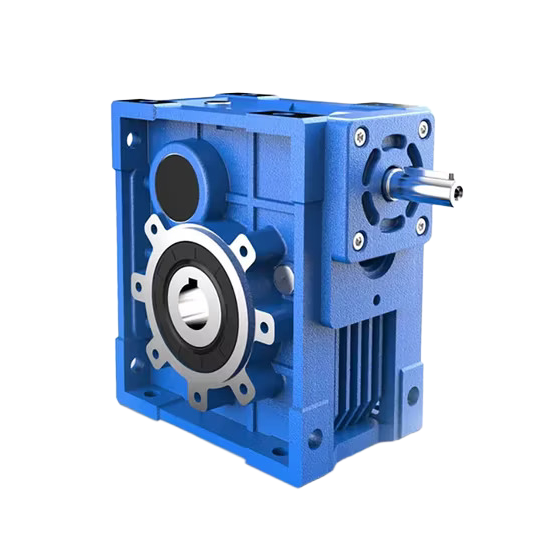
What is a Worm Gear and how does it work? At its core, a worm gear is a unique power transmission mechanism consisting of a threaded screw (the worm) that meshes with a toothed wheel (the worm gear or worm wheel). The fundamental principle is simple yet brilliant: when the worm rotates, its threads push against the teeth of the gear, causing it to turn. This setup creates a high-ratio speed reduction in a single, compact stage, with the axis of the worm positioned at a right angle to the gear. Crucially, the design often allows the worm to drive the gear easily, but the gear cannot drive the worm, creating an inherent self-locking feature. This makes worm gears exceptionally valuable in applications where preventing backdriving is critical for safety and positioning, such as in conveyor systems, lifts, and heavy-duty machinery. For engineers and procurement specialists seeking reliable, high-torque, and space-saving motion control solutions, understanding the working principle of worm gears is the first step toward optimizing mechanical design and ensuring operational safety.
Article Outline:
Imagine a high-end packaging line or a sensitive medical imaging device. Excessive vibration and noise aren't just nuisances; they signal inefficiency, cause premature wear, and can ruin product quality or compromise delicate operations. Standard gear systems often contribute to this problem through meshing impacts and backlash. This is where the elegant engineering of a worm gear shines. The sliding contact between the worm and gear teeth, as opposed to the sudden impact of spur gears, results in remarkably smooth and quiet operation. This inherent characteristic drastically reduces vibration and noise levels, making worm gears the preferred choice for environments where silence and smooth motion are paramount. For procurement managers sourcing components for medical, laboratory, or office equipment, specifying a worm gear drive is a direct solution to noise compliance and precision movement challenges.
When evaluating a worm gear reducer for such applications, key parameters beyond noise become critical. Here is a comparison of typical specifications to guide your selection:
| Parameter | Typical Range / Feature | Importance for Low-Noise Apps |
|---|---|---|
| Gear Ratio | 5:1 to 100:1 (single stage) | Higher ratios allow slower output speed, reducing noise generation at the load. |
| Efficiency | 50% - 90% (depends on ratio & materials) | Higher efficiency (often with bronze gears) reduces energy loss as heat and vibration. |
| Backlash | Low to Precision (< 10 arc-min) | Minimal backlash is crucial for precise positioning and prevents "chatter" or play. |
| Housing Material | Cast Iron / Aluminum Alloy | Rigid housing dampens vibrations. Aluminum offers lighter weight for portable devices. |
At Raydafon Technology Group Co.,Limited, we engineer our worm gearboxes with a focus on ultra-quiet operation. Using premium materials and precise manufacturing tolerances, our reducers deliver the smooth, silent performance required for your most demanding precision applications, directly solving the core problem of disruptive noise and vibration.
Design engineers and plant managers constantly face the puzzle of fitting powerful drive systems into increasingly compact machinery. Conveyor drives inside narrow frames, actuators within robotic arms, or adjustment mechanisms in confined spaces all demand high torque output without the luxury of ample installation room. Traditional multi-stage gear trains can solve the torque issue but often at the cost of excessive length or complex layouts. The worm gear mechanism provides an elegant answer. Its compact, right-angle configuration allows the motor to be mounted perpendicular to the load, efficiently utilizing "dead" space within a machine's envelope. This single-stage solution can achieve high reduction ratios and substantial torque multiplication in a remarkably small footprint, simplifying design and saving valuable real estate.
Selecting the right compact worm gear involves balancing torque, size, and thermal performance. The following table outlines key considerations:
| Parameter | Consideration for Compact Design | Raydafon's Solution Focus |
|---|---|---|
| Center Distance | Smaller distances (e.g., 25mm, 40mm) enable more compact units. | We offer a wide range of miniature and small-footprint worm gearboxes. |
| Output Torque | Ensure rated torque meets peak load demands in the confined space. | Our designs optimize gear geometry and material strength for high torque density. |
| Thermal Capacity | Compact size reduces heat dissipation area. Overheating is a key risk. | We use high-efficiency designs and offer fan-cooling or forced lubrication options for demanding duty cycles. |
| Mounting Options | Versatile flanges (IEC/NEMA) and foot mounts provide flexible integration. | Our products feature multiple standard mounting configurations to fit your layout. |
Raydafon Technology Group specializes in high-density power transmission. Our engineers understand the space-force dilemma and design worm gear reducers that pack maximum performance into minimal space, providing procurement teams with the perfect off-the-shelf or customized solution for space-constrained applications.
Q: What are the main advantages and disadvantages of a worm gear?
A: The primary advantages include high reduction ratios in a single stage, compact right-angle design, smooth and quiet operation, and reliable self-locking to prevent backdriving. The main disadvantage is lower mechanical efficiency compared to other gear types (like helical or planetary), which can lead to higher energy consumption and heat generation, especially at high reduction ratios. This trade-off makes them ideal for intermittent or moderate-duty applications where their unique benefits are critical.
Q: How do I select the right worm gear material combination?
A: The classic and most common combination is a hardened steel worm meshing with a bronze (often phosphor bronze) worm wheel. The steel provides strength and durability for the driving worm, while the softer bronze accommodates the sliding action, offers good wear resistance, and provides a degree of emergency run-in capability. For lighter loads or cost-sensitive applications, combinations like steel-on-cast iron or even polymer wheels are used. The choice significantly impacts efficiency, wear life, and cost, so consult with a specialist like Raydafon to match the material to your specific application needs.
Choosing the right power transmission component is pivotal for machine reliability, efficiency, and total cost of ownership. For over two decades, Raydafon Technology Group Co.,Limited has been a trusted partner for engineers and procurement professionals worldwide, providing robust and innovative worm gear solutions. We combine deep technical expertise with a commitment to quality, ensuring our speed reducers meet the most stringent demands. Visit our website at https://www.raydafon-reducers.com to explore our extensive product catalog and technical resources. For detailed quotations, custom design inquiries, or technical support, please contact our sales team directly at [email protected]. Let us help you solve your next drive system challenge.
Kumar, S., & Singh, R. (2021). Analysis of Thermal and Efficiency Characteristics in High-Ratio Worm Gear Drives. Journal of Mechanical Design, 143(7), 071402.
Maiti, R., & Roy, S. (2020). A Study on Contact Stress and Wear Behavior of Steel-Bronze Worm Gear Pair under Lubricated Conditions. Wear, 452-453, 203279.
Chen, H., Wang, J., & Li, Y. (2019). Optimization of Tooth Profile for Cylindrical Worm Gears to Improve Load Capacity and Efficiency. Mechanism and Machine Theory, 142, 103597.
Pedersen, N. L. (2018). On the Self-Locking Behavior of Worm Gears. Proceedings of the Institution of Mechanical Engineers, Part C: Journal of Mechanical Engineering Science, 232(18), 3305-3317.
Shi, W., Wang, X., & Wang, S. (2017). Dynamic Modeling and Vibration Analysis of Worm Gear Transmission System with Considering Friction. Journal of Sound and Vibration, 409, 324-339.
Litvin, F. L., Fuentes, A., & Hayasaka, K. (2016). Design, Generation and Stress Analysis of Face-Worm Gear Drives with Conical and Cylindrical Worms. Computer Methods in Applied Mechanics and Engineering, 311, 538-556.
Dudley, D. W. (2014). Handbook of Practical Gear Design (4th ed.). CRC Press. (Comprehensive reference including worm gear chapters).
Vijayakar, S., & Houser, D. R. (2012). A Surface Integral Approach to the Simulation of Worm Gear Performance. Journal of Mechanical Design, 134(1), 011007.
Tsay, C. B., & Fong, Z. H. (2011). Mathematical Model and Under cutting Analysis of ZK-Type Worm Gear Set Manufactured by Hobbling. ASME Journal of Manufacturing Science and Engineering, 133(4), 041008.
Seol, I. H., & Chung, S. C. (2010). A Study on the Frictional Heat and Thermal Deformation of Worm Gears. International Journal of Precision Engineering and Manufacturing, 11(4), 517-523.