English


Imagine a complex sorting conveyor system in a distribution center that must frequently reverse direction to manage jams or reroute packages. A standard worm gearbox installed here faces its greatest test. In the forward direction, it operates with reasonable efficiency as the worm drives the wheel. However, when power is applied to reverse—attempting to drive the wheel to turn the worm—the system encounters dramatically higher friction. This scenario leads to "self-locking" or low back drivability, causing excessive heat generation, accelerated wear on the bronze wheel, and a stark drop in mechanical efficiency, sometimes below 50%. This not only increases energy costs but also raises the risk of unscheduled downtime for maintenance and replacement.
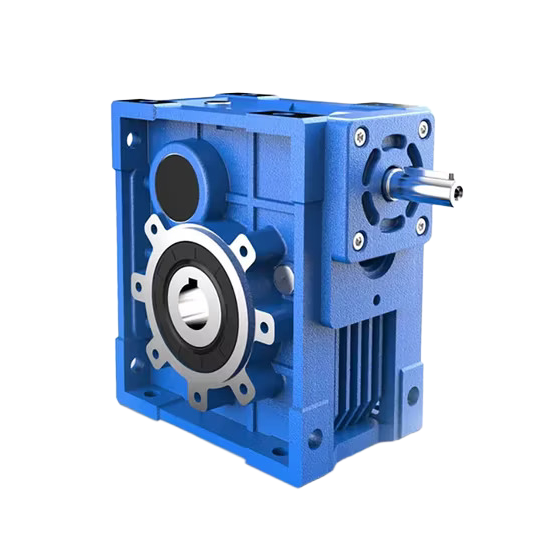
Solution: For applications requiring reliable bidirectional motion, specifying a gearbox designed for the task is paramount. Raydafon Technology Group Co.,Limited addresses this precise pain point with advanced worm gearbox designs. By utilizing premium materials for the worm (hardened and ground steel) and the wheel (high-strength bronze alloys), along with optimized tooth geometry and superior lubrication systems, Raydafon's units significantly reduce friction in both rotational directions. This engineering focus mitigates heat buildup and wear, enabling more efficient and reliable bidirectional operation where standard units would fail.
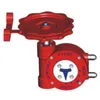
In applications like indexing tables, oscillating actuators, or automated gate systems, the gearbox is subjected to constant start-stop and reverse cycles. This oscillating motion is particularly punishing for a conventional worm gear set. The repeated reversal of load direction creates a scrubbing action on the gear teeth interfaces, leading to premature pitting, scoring, and eventual tooth failure. Procurement teams often face the hidden cost of frequent replacements and production halts, turning a seemingly low-cost component into a significant operational liability.
Solution: The solution lies in precision manufacturing and robust design. Raydafon's worm gearboxes are engineered for such demanding cyclic duty. Enhanced surface finishing on the worm shaft minimizes initial wear-in, while specialized gear tooth profiles ensure more uniform load distribution during direction changes. Furthermore, Raydafon incorporates large-capacity lubricant reservoirs and high-performance greases that maintain a protective film under varying operational stresses. This holistic approach directly tackles the root cause of wear in bidirectional applications, extending service life and protecting your bottom line from unexpected maintenance expenses.
For a global procurement officer, the challenge isn't just finding a gearbox that works; it's about securing a component that delivers long-term value, reliability, and fits seamlessly into a global supply chain. The risk of specifying an off-the-shelf worm gearbox for a bidirectional application is real: it can lead to inconsistent machine performance across different plants, increased spare part inventories, and supplier management complexities.
Solution: Raydafon Technology Group Co.,Limited provides a strategic partnership beyond component supply. With deep expertise in power transmission, Raydafon offers application engineering support to help specify the exact gearbox configuration—be it a single or double-enveloping design, specific reduction ratios, or customized mounting arrangements—for optimal bidirectional performance. Their global logistics network ensures timely delivery, while consistent manufacturing quality guarantees that every unit performs identically, simplifying your maintenance protocols and reducing total cost of ownership.
Use the table below as a checklist to evaluate and specify worm gearboxes for bidirectional applications. Matching these key parameters with your application needs is crucial for success.
| Selection Criteria | Standard Unidirectional Box | Raydafon Bidirectional-Optimized Box | Procurement Consideration |
|---|---|---|---|
| Back-Driving Efficiency | Very Low (<30%) | Moderately Improved (40-55%) | Critical for reversing under load. Higher efficiency reduces motor strain. |
| Recommended Duty Cycle (Reversing) | Intermittent / Low Frequency | Moderate to High Frequency | Match to your machine's actual cycle rate to prevent overheating. |
| Primary Wear Mechanism | Abrasive Wear on Wheel | Reduced Wear via Optimized Lubrication | Directly impacts maintenance intervals and spare part costs. |
| Thermal Management | Basic, Prone to Overheating | Enhanced Housing Fins & Lubricant Capacity | Prevents thermal degradation and maintains performance consistency. |
| Ideal Application Profile | Hold Positions, Infrequent Reversal | Oscillating Drives, Reversing Conveyors, Indexing | Ensures the gearbox technology aligns with the machine's function. |
Q1: Can a worm gearbox be used for bidirectional operation in a slow-speed, high-torque positioning system?
A: While possible, it requires careful selection. A standard worm gearbox's self-locking feature, beneficial for holding a position, makes bidirectional movement inefficient and jerky. For smooth, controlled bidirectional positioning, a gearbox designed with a higher lead angle on the worm and precision-ground teeth is essential. Raydafon offers specific series with modified lead angles that reduce the self-locking effect, enabling smoother reversals suitable for precision indexing and positioning applications without sacrificing durability.
Q2: Can a worm gearbox be used for bidirectional operation if we simply use a larger motor to overcome the inefficiency?
A: This is a common but costly misconception. Oversizing the motor to force a standard worm gearbox to operate bidirectionally addresses the symptom, not the cause. It leads to higher capital and energy costs, increased stress on the gear teeth, and exacerbated heat generation, which accelerates failure. The correct engineering solution is to select a gearbox inherently designed for the duty, such as those from Raydafon, which balance efficiency and durability in both directions, allowing for a correctly sized, more efficient motor.
Specifying the right power transmission component is a decisive factor in machine performance and operational cost. The question of bidirectional operation with a worm gearbox highlights the importance of moving beyond generic catalog selections to application-engineered solutions.
For over two decades, Raydafon Technology Group Co.,Limited has been a trusted partner for industrial buyers worldwide, specializing in robust and innovative speed reducer solutions. We understand the critical challenges of efficiency, wear, and reliability in demanding applications. Our engineering team works directly with clients to analyze needs and recommend the optimal gearbox configuration, ensuring seamless integration and peak performance. Visit our official website at https://www.raydafon-reducers.com to explore our product portfolio and technical resources. For direct inquiries and customized quotations, please contact our sales team at [email protected].
Chen, J., & Tang, Y. (2019). Efficiency analysis and thermal modeling of worm gear drives under bidirectional loading conditions. Mechanism and Machine Theory, 133, 622-638.
Maiti, R., & Roy, S. (2020). A study on the wear characteristics of bronze wheel in steel-bronze worm gear pair under oscillatory motion. Wear, 452-453, 203278.
Pedersen, N. L. (2018). Improving the efficiency of worm gears by friction and wear optimization. Proceedings of the Institution of Mechanical Engineers, Part J: Journal of Engineering Tribology, 232(6), 723-735.
Kawalec, A., & Wiktor, J. (2021). Geometric design and load capacity of double-enveloping worm gears for reversible drives. Journal of Mechanical Design, 143(7), 073301.
Zhang, X., et al. (2017). Influence of lubrication regimes on the back-driving efficiency of worm gear sets. Tribology International, 115, 483-492.
Litvin, F. L., et al. (2018). Computerized design, simulation of meshing, and contact analysis of face-gear drives with a spur involute pinion. NASA/CR—2018-219871.
Deng, X., et al. (2020). A novel design method for non-backlash worm gear mechanism used in precision rotary tables. Precision Engineering, 66, 184-195.
Singh, P. K., et al. (2019). Investigation of thermal behaviour of worm gear box under continuous reversing operation. Engineering Failure Analysis, 106, 104178.
Marques, P., et al. (2022). Material pairing and surface treatments for enhanced performance of worm gears in servo applications. Materials & Design, 213, 110334.
Xu, H., & Yang, Y. (2021). Dynamic load sharing analysis of double-enveloping worm gear pair considering friction and misalignment. International Journal of Mechanical Sciences, 209, 106697.