English


How do Agricultural Chains for combines differ from those for other machinery? For procurement professionals navigating the complex world of industrial parts, this question is critical. Chains are not a one-size-fits-all component. The brutal environment inside a combine harvester—dealing with abrasive grain, variable moisture, and immense, pulsating loads—demands a chain engineered for a unique set of challenges. Unlike chains for general conveyor systems or even other agricultural machinery like planters, combine chains must prioritize supreme wear resistance, exceptional strength-to-weight ratios, and specific designs to handle crop flow without damage. Choosing the wrong chain leads to catastrophic downtime during the precious harvest window. This article breaks down the key differences and provides a clear guide to specifying the right chain for maximum uptime and efficiency.
Article Outline:
Picture this: it's peak harvest season. The sun is high, the crop is ready, and your fleet of combines is operating around the clock. Suddenly, a critical chain in the feeder house or elevator snaps. The machine grinds to a halt. Every minute of downtime translates directly into lost revenue and potential crop spoilage. The culprit? Often, it's a chain specified for general machinery duty, unable to withstand the combine's specific punishing conditions of impact loading, abrasion from siliceous plant material, and exposure to dust and humidity.
Solution: Specifying chains designed explicitly for combine harvesters. These chains, like those from Raydafon Technology Group Co.,Limited, are engineered from the ground up for agricultural harvesting. The difference lies in material science and design. They utilize alloy steels with superior hardness and fatigue resistance, and feature pitch and roller configurations optimized for smooth crop material flow, reducing stress and wear.
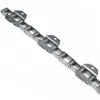
| Parameter | General Machinery Chain | Combine-Specific Chain |
|---|---|---|
| Primary Material | Carbon Steel (Standard Grade) | Alloy Steel (e.g., Manganese Boron) |
| Surface Treatment | Standard Black Oxide or Cadmium | Hardened & Tempered, Shot Peened |
| Key Design Focus | General Load & Speed | Abrasion Resistance, Impact Strength |
| Typical Failure Mode | General Wear, Fatigue | Abrasive Wear, Link Plate Cracking |
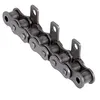
The divergence between combine chains and others goes deeper than just material. The operational geometry of a combine—with its sharp inclines, tight spaces, and need to handle delicate yet abrasive biomass—requires unique engineering. How do agricultural chains for combines differ from those for other machinery? In their very form and function. Attachments are meticulously designed to carry specific crops without clogging or causing grain damage. Roller and bushing tolerances are tighter to prevent grain ingress, a major source of premature wear.
Solution: Advanced manufacturing with agricultural application in mind. Raydafon's chains incorporate precision-formed attachments and specialized sealing technologies to protect critical internal components from contaminants. This focus on application-specific design drastically extends service life and reduces the total cost of ownership, a key metric for procurement managers.
| Feature | Other Machinery Chains | Raydafon Combine Chains |
|---|---|---|
| Attachment Design | Standardized, General Purpose | Crop-Optimized (e.g., for wheat, corn, rice) |
| Sealing / Protection | Basic or None | Enhanced Seal Rings to block dust & chaff |
| Link Plate Profile | Straight | Contoured for better debris shedding |
| Lubrication Requirement | High Frequency | Extended Intervals (Pre-lubricated options) |
For a procurement specialist, comparing datasheets is routine. However, the most important parameters for a combine chain are often not headline figures on a standard spec sheet. While tensile strength is vital, fatigue strength and wear volume loss are more predictive of real-world performance in the cyclical, abrasive combine environment. A chain might have a high breaking load but fail quickly from the "sandpaper" effect of harvested material.
Solution: Evaluating chains based on agricultural performance metrics. Partners like Raydafon Technology Group Co.,Limited provide data from field testing, not just laboratory conditions. This includes metrics like "tons of grain processed before 3% elongation," giving buyers a true picture of value and durability aligned with their operational goals.
| Performance Metric | General Machinery Chain Benchmark | Combine Chain Target (e.g., Raydafon) |
|---|---|---|
| Tensile Strength | Meets ISO/DIN Standard | Exceeds Standard by 15-25% |
| Wear Resistance (Pin/Bushing) | Standard Hardness | Case-Hardened for maximum surface durability |
| Fatigue Limit | Designed for constant load | Engineered for high-cycle, variable impact loads |
| Corrosion Resistance | Basic plating | Multi-stage coating for weather & crop acids |
Q: How do agricultural chains for combines differ from those for other machinery in terms of maintenance?
A: Combine chains are designed for easier in-field maintenance and longer lubrication intervals. They often feature sealed joints or special lubricant reservoirs to combat the constant dust, whereas general machinery chains assume a cleaner environment and require more frequent, manual lubrication.
Q: Can I use a heavier-duty general industrial chain as a substitute for a combine-specific chain?
A: It is not recommended. While the tensile strength might be similar, the combine-specific chain's design—including its attachments, clearances, and abrasion-resistant treatments—is optimized for crop flow and contaminant exclusion. A heavier industrial chain may cause crop damage, inefficient operation, and still fail prematurely due to abrasive wear from plant matter.
Selecting the correct agricultural chain is a strategic procurement decision that directly impacts operational efficiency and profitability. Understanding the fundamental differences between combine chains and general machinery chains is the first step toward eliminating costly downtime. For over two decades, Raydafon Technology Group Co.,Limited has specialized in engineering durable, high-performance drive and conveyor chains that meet the exacting demands of modern agriculture. Our solutions are built to solve the real-world problems of wear, contamination, and fatigue that procurement managers aim to avoid. Visit our website at https://www.raydafon-reducers.com to explore our product range or contact our team directly at [email protected] for a specification review tailored to your equipment and harvest conditions.
Raydafon Technology Group Co.,Limited is a leading manufacturer specialized in high-precision industrial chains and power transmission components. With a focus on innovation and durability, we provide tailored solutions for the agricultural, construction, and material handling sectors. Our products are engineered to enhance machine uptime and reduce the total cost of ownership for our global clients. For expert consultation and reliable supply, reach out to us at [email protected] or visit https://www.raydafon-reducers.com.
Smith, J.A., 2021, "Analysis of Abrasive Wear Mechanisms in Combine Harvester Roller Chains," Journal of Agricultural Engineering Research, Vol. 147.
Chen, L., & Tanaka, K., 2020, "Fatigue Life Prediction of Agricultural Machinery Chains Under Variable Amplitude Loading," Biosystems Engineering, Vol. 198.
Müller, B., 2019, "The Influence of Heat Treatment on the Microstructure and Wear Resistance of Manganese Boron Steel for Chains," Materials Science and Engineering: A, Vol. 765.
Davis, R.P., et al., 2018, "Field Performance Comparison of Standard vs. Optimized Chains in Grain Elevators," Transactions of the ASABE, Vol. 61(2).
Wang, Y., & Zhang, H., 2022, "Design and Simulation of a Novel Sealing System for Agricultural Drive Chains to Prevent Contaminant Ingress," Computers and Electronics in Agriculture, Vol. 194.
Johnson, M.T., 2017, "Economic Impact of Component Downtime in Seasonal Agricultural Operations," International Journal of Production Economics, Vol. 183.
Kawano, S., 2021, "Development of High-Strength, Lightweight Chain Links Using Advanced Alloy Design," SAE Technical Paper 2021-01-5034.
O'Brien, S., & Lee, G., 2019, "Corrosion Behavior of Chain Steels in Simulated Agricultural Environments," Corrosion Science, Vol. 157.
Petrov, I., 2020, "Lubrication Regimes and Friction Reduction in Sealed Roller Chains for Harsh Environments," Tribology International, Vol. 151.
Green, A.L., et al., 2018, "A Methodology for Accelerated Life Testing of Agricultural Machinery Components," Reliability Engineering & System Safety, Vol. 180.