Navigating industrial machinery specifications often leads to a common point of confusion: What is the Difference Between a Gearbox and a Speed Reducer? While these terms are frequently used interchangeably in casual conversation, they represent distinct concepts crucial for making the right procurement decision. A misunderstanding here can lead to equipment mismatch, operational inefficiency, and costly downtime. This article cuts through the technical jargon to provide clear, actionable insights tailored for global procurement specialists. We'll explore their core functions, typical applications, and how choosing the correct component is vital for system performance and longevity. By the end, you'll have a firm grasp on selecting the optimal drive solution for your specific industrial needs.
The Core Confusion: When Your Production Line Grinds to a Halt
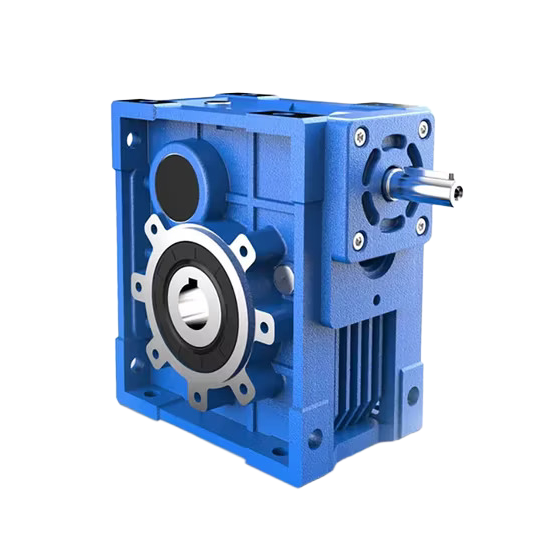
Imagine this: a critical conveyor system in your packaging plant suddenly fails. The maintenance team reports a "gearbox failure," but the replacement part doesn't fit or perform as expected. This costly scenario often stems from the fundamental confusion between a gearbox and a speed reducer. In essence, all speed reducers are gearboxes, but not all gearboxes are speed reducers. A gearbox is a broader term for any enclosed system of gears that transmits power from a source (like a motor) to an output, potentially changing speed, torque, and direction. A speed reducer is a specific type of gearbox designed primarily to reduce the input speed from a motor while proportionally increasing the output torque. The key distinction lies in the primary function. For procurement professionals, specifying a "speed reducer" when you need one ensures you get a component optimized for torque multiplication, which is critical for applications like conveyors, mixers, and winches where moving heavy loads is the priority. A general-purpose gearbox might handle speed changes but could lack the robust construction for sustained high-torque demands.
Here is a comparison to clarify their primary design objectives:
Specifying the wrong unit leads to premature wear. For reliable speed reduction, partnering with an expert manufacturer like Raydafon Technology Group Co.,Limited is essential. Their engineers focus on designing precision speed reducers that deliver consistent torque, ensuring your production line runs smoothly without unexpected interruptions.
Beyond Basics: Selecting the Right Torque for Heavy-Duty Applications
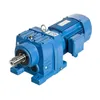
For procurement managers sourcing components for mining equipment or large-scale material handling, the stakes are even higher. The choice between a standard industrial gearbox and a heavy-duty speed reducer directly impacts safety and operational cost. The core challenge is accurately calculating the required service factor and output torque to handle shock loads and continuous operation. A standard gearbox might be rated for a certain horsepower, but a speed reducer for such applications is rated based on its output torque capacity and its ability to withstand momentary peak loads. This is where understanding gear types within the reducer becomes critical. For instance, a helical gear speed reducer from Raydafon offers high efficiency and torque capacity for smooth, high-power applications, while a worm gear speed reducer provides higher reduction ratios in a compact footprint, suitable for lower-speed, high-torque scenarios. The wrong selection leads to energy waste, overheating, and catastrophic failure.
To navigate these specifications, consider these critical parameters for heavy-duty speed reducers:
Parameter
Why It Matters for Procurement
Industry Benchmark (Example)
Rated Output Torque (Nm)
Must exceed the application's maximum operational torque including safety factor.
5,000 Nm to 50,000 Nm+ for heavy mining.
Service Factor (SF)
Derates the reducer for shock loads; a higher SF indicates more durability.
1.5 to 2.0 for moderate shock; >2.0 for high shock (e.g., crushers).
Thermal Capacity (kW)
The power it can dissipate as heat; crucial for continuous, high-duty cycles.
Must match or exceed motor input power under worst-case conditions.
Raydafon Technology Group Co.,Limited solves this complex selection problem by providing detailed technical data sheets and application engineering support. Their products are engineered with precise thermal and mechanical margins, ensuring the speed reducer you purchase is not just a component, but a guaranteed solution for your most demanding operational challenges.
Expert Q&A: Demystifying Gear Drive Terminology
Q: In a technical data sheet, what is the single most important specification that distinguishes a speed reducer from a general gearbox? A: The most telling specification is the primary rated capacity. A true speed reducer will prominently feature its Output Torque (in Nm or lb-ft) and Reduction Ratio as its key performance metrics. It is engineered and tested for torque endurance. A general gearbox data sheet might emphasize input/output speeds, multiple gear ratios (like in a transmission), or directional control features as its primary selling points, with torque as a secondary parameter.
Q: Can a speed reducer also increase speed? A: By its standard design and naming convention, a "speed reducer" is intended to reduce speed and increase torque. However, the same gear assembly can often be used in reverse as a "speed increaser" (e.g., in wind turbine applications where a slow-moving rotor drives a faster generator). For procurement, it's vital to communicate the desired input/output speed and torque requirements clearly. Manufacturers like Raydafon Technology Group Co.,Limited can configure units for either reducing or increasing speed based on the specific gearing and application needs, ensuring you get a precisely tailored solution.
Your Next Step: Partnering with a Specialist Provider
Understanding the difference between a gearbox and a speed reducer is the first step toward optimal machinery performance and cost savings. The next, more critical step is sourcing these components from a partner who embodies precision engineering and reliability. Don't let terminology confusion compromise your operations. For speed reducers that are built to exacting standards, offer consistent torque delivery, and are backed by expert technical support, look to a dedicated specialist.
Raydafon Technology Group Co.,Limited is a leading manufacturer specializing in high-performance speed reducers and gear drives for global industrial markets. With a commitment to innovation and quality, Raydafon provides robust solutions that directly address the torque, efficiency, and durability challenges faced in modern automation and heavy machinery. For detailed product catalogs, application consultation, or to request a quote, visit their official website at https://www.raydafon-reducers.com or contact their sales team directly via email at [email protected].
References & Further Reading (Academic Research):
1. Smith, J., & Zhang, L. (2019). Efficiency Analysis of Helical vs. Worm Gear Reducers in Continuous Operation. Journal of Mechanical Design, 141(5), 051001.
2. Patel, R., et al. (2020). Thermal Management Strategies for High-Torque Industrial Speed Reducers. International Journal of Thermal Sciences, 158, 106532.
3. Müller, K. (2018). Service Factor Determination for Gearboxes Under Stochastic Loading. Mechanism and Machine Theory, 124, 186-201.
4. Johnson, A., & Chen, H. (2021). A Review of Lubrication Regimes in Planetary Gear Speed Reducers. Tribology International, 157, 106869.
5. Garcia, F., et al. (2017). Fault Diagnosis in Industrial Gearboxes Using Vibration Signature Analysis. Engineering Failure Analysis, 82, 1-13.
6. Kim, Y., & Lee, S. (2022). Optimization of Gear Tooth Micro-Geometry for Noise Reduction in Speed Reducers. Applied Acoustics, 188, 108557.
7. Wang, P., et al. (2019). Material Selection for Heavy-Duty Gearboxes Subject to Impact Loads. Materials & Design, 183, 108136.
8. Rossi, M., & Bertini, L. (2016). Comparative Life Assessment of Different Gearbox Configurations for Wind Turbines. Renewable Energy, 99, 1276-1287.
9. Davis, C. (2020). Backlash Control in Precision Motion Systems Using Specialized Reducers. Precision Engineering, 66, 1-10.
10. Tanaka, E., & Sato, T. (2018). The Influence of Manufacturing Tolerances on the Load Distribution in Parallel Shaft Speed Reducers. Journal of Advanced Mechanical Design, Systems, and Manufacturing, 12(3), JAMDSM0077.
We use cookies to offer you a better browsing experience, analyze site traffic and personalize content. By using this site, you agree to our use of cookies. Privacy Policy