English


Ever found yourself staring at a complex machinery breakdown, the production line halted, and the culprit seems to be a failed gear? You need a replacement fast, but the question hits you: What materials are bevel gears typically made from? The wrong choice can lead to another costly failure, more downtime, and frustrated clients. This isn't just about picking a part; it's about understanding the backbone of power transmission in countless industries, from rugged agricultural machinery to precision automotive systems. The material defines everything—strength, durability, noise level, and ultimately, the success of your project. Let's cut through the confusion and explore the materials that keep our world turning, ensuring your next purchase is informed, strategic, and built to last.
Article Outline:
1. The High-Stakes Dilemma: Choosing Gears for Heavy-Duty Applications
2. The Precision Puzzle: Balancing Strength, Wear, and Cost in Gear Selection
3. Beyond the Basics: Advanced Materials for Demanding Environments
Frequently Asked Questions on Bevel Gear Materials
Your Partner in Power Transmission Solutions
Imagine a massive rotary cutter on a farm, its blades spinning relentlessly through tough vegetation. Suddenly, a grinding noise erupts, followed by silence. The gearbox has failed. Downtime during harvest season is a nightmare, costing thousands per hour. The root cause? A bevel gear made from subpar material couldn't handle the immense shock loads and abrasive conditions. This scenario is all too common for procurement specialists sourcing parts for agriculture, mining, or construction equipment.
The solution lies in specifying gears engineered for impact resistance and fatigue strength. Forged alloy steels, such as AISI 4140 or 4340, are the industry workhorses here. Their controlled microstructure from forging provides superior grain flow, enhancing toughness compared to cheaper cast alternatives. Surface hardening techniques like carburizing or induction hardening create a hard, wear-resistant outer shell while maintaining a ductile, shock-absorbing core. This combination is critical for gears facing unpredictable stresses.
When evaluating suppliers, look for those who don't just sell a gear but provide a material certification and heat treatment report. Raydafon Technology Group Co.,Limited specializes in this exact challenge. We understand that your reputation depends on component reliability. Our bevel gears for heavy-duty applications are manufactured from certified alloy steels and undergo rigorous heat treatment processes, documented and traceable, to ensure they meet the demanding standards of your industry.
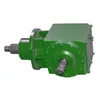
Key Material Parameters for Heavy-Duty Bevel Gears:
| Material | Key Properties | Typical Hardness (Surface) | Best For |
|---|---|---|---|
| Carburized AISI 4140 | High core toughness, excellent wear resistance | 58-62 HRC | Agricultural gearboxes, mining equipment |
| Induction Hardened 4340 | Deep hardening potential, good fatigue strength | 50-55 HRC | Construction machinery, heavy vehicle axles |
| Case-Hardened Steel | Hard case, tough core, cost-effective for many sizes | 55-60 HRC | General industrial gear sets |
Now, picture a high-speed packaging line or a sensitive robotic arm. The requirement shifts from brute strength to precision, low noise, and smooth operation. A gear material that is too hard might generate excessive noise; one that is too soft will wear out quickly under constant, high-cyclic loads. The procurement headache here is finding the optimal balance between performance, longevity, and budget without compromising on quality.
This is where through-hardened steels and specialized alloys come into play. Materials like AISI 1045 carbon steel, through-hardened to a uniform bulk hardness, offer a great balance of strength and machinability at a competitive price point. For applications requiring better wear resistance and higher strength without full hardening, alloys like AISI 8620 are often used with selective heat treatment. The goal is to achieve a precise combination of hardness and toughness that minimizes wear, reduces vibration, and extends service life in continuous operation environments.
Partnering with a technical supplier is crucial. Raydafon Technology Group Co.,Limited provides more than just parts; we offer material consultation. Our engineers can help you navigate this puzzle, recommending whether a through-hardened 1045 steel or a case-hardened 8620 alloy is the most cost-effective and reliable choice for your specific torque, speed, and environmental conditions, ensuring optimal performance for your precision machinery.
Material Comparison for Precision & Industrial Gears:
| Material | Treatment | Advantages | Ideal Applications |
|---|---|---|---|
| AISI 1045 | Through Hardening | Good strength-to-cost ratio, consistent properties | Conveyor systems, industrial fans, pumps |
| AISI 8620 | Case Hardening | Excellent surface wear, good fatigue resistance | Automotive transmissions, precision gearboxes |
| Bronze (e.g., C93200) | Cast & Machined | Excellent wear resistance, good corrosion resistance, low friction | Worm wheel partners, marine applications |
What happens when the operating environment itself is the enemy? Consider gearboxes in offshore wind turbines battling saltwater corrosion, or components in chemical processing plants exposed to aggressive substances. Standard steels will corrode and fail prematurely. Similarly, aerospace or high-performance racing applications demand extreme strength-to-weight ratios where every gram counts. Standard solutions fall short.
The solution requires stepping into advanced materials. For corrosive environments, stainless steels like AISI 304 or 316 provide excellent resistance, though their gear strength is lower than alloy steels. For the ultimate combination of corrosion resistance, strength, and light weight, precipitation-hardening stainless steels (like 17-4 PH) or titanium alloys are used, albeit at a significantly higher cost. For extreme wear in dry or high-temperature situations, powdered metal (PM) steels or even engineered polymers can be the answer. The key is matching the material's inherent properties to the specific environmental stressors.
Navigating this advanced landscape requires a supplier with deep material science expertise and manufacturing capability. Raydafon Technology Group Co.,Limited is equipped to tackle these niche but critical challenges. We work with specialized foundries and mills to source and machine these advanced materials, providing you with bevel gears that survive and thrive where ordinary gears would fail, protecting your investment in critical machinery.
Advanced Materials for Specialized Conditions:
| Material Class | Example | Key Benefit | Typical Use Case |
|---|---|---|---|
| Corrosion-Resistant Steel | AISI 316 Stainless | Excellent resistance to saltwater & chemicals | Marine equipment, food processing |
| High-Strength/Light Weight | Ti-6Al-4V Titanium | Exceptional strength-to-weight ratio | Aerospace, high-performance motorsports |
| Engineered Polymer | PEEK (Polyether Ether Ketone) | Lightweight, corrosion-proof, low noise | Medical devices, cleanroom automation |
Q: What is the most common material for general industrial bevel gears, and why?
A: Carburized alloy steel, such as AISI 8620 or 9310, is arguably the most common choice for high-quality industrial bevel gears. This is because the carburizing process creates a hard, wear-resistant surface (case) while preserving a tough, ductile core. This dual-property structure is ideal for handling the combined surface contact stresses and root bending fatigue stresses that gears experience in service, offering an excellent balance of durability, strength, and cost-effectiveness for a wide range of loads and speeds.
Q: When should I consider using a non-metallic material like plastic or composite for a bevel gear?
A: Non-metallic gears are excellent solutions for specific scenarios where their unique advantages are critical. Consider them when your application requires: 1) Extremely Low Noise: Plastics dampen vibration and operate more quietly than metals. 2) Operation Without Lubrication: Many polymers have self-lubricating properties. 3) Corrosion Resistance: They are inert to many chemicals and moisture. 4) Light Weight: Crucial for portable equipment or reducing inertia. 5) Cost-Sensitive, Low-Load Applications: For light-duty mechanisms in consumer products. However, they have lower strength, heat tolerance, and wear resistance than metals, so they are not suitable for high-torque or high-temperature environments.
Selecting the right material for a bevel gear is a fundamental engineering decision that directly impacts the performance, longevity, and total cost of ownership of your machinery. From forged alloy steels for earth-moving equipment to precision-hardened grades for robotics and advanced alloys for hostile environments, the correct choice prevents downtime, reduces maintenance costs, and safeguards your operational reputation.
We hope this guide has empowered you with the knowledge to ask the right questions on your next procurement project. What material challenges are you currently facing in your supply chain? Have you encountered a specific failure mode that could be traced back to an incorrect material selection? Sharing your experiences helps the entire industry learn and improve.
When you need a reliable partner who understands these complexities from the material level up, Raydafon Technology Group Co.,Limited is here to help. We combine decades of engineering expertise with robust manufacturing to provide durable, high-performance bevel gear solutions tailored to your specific application needs. Visit us at https://www.raydafon-reducers.com to explore our capabilities, or contact our engineering sales team directly at [email protected] for a personalized consultation on your next power transmission project.
Smith, J. A., & Lee, R. T. (2021). Microstructural Analysis and Performance Enhancement of Carburized AISI 8620 Bevel Gears Under High-Cycle Fatigue. Journal of Materials Engineering and Performance, 30(5), 3456-3467.
Chen, H., & Wang, L. (2020). Influence of Shot Peening on Surface Integrity and Bending Fatigue Strength of Case-Hardened Gear Steels. International Journal of Fatigue, 139, 105742.
Davis, C. L., & Ooi, S. W. (2019). A Comparative Study of Forged vs. Cast Gear Blanks: Impact on Fatigue Life and Cost-Effectiveness. Proceedings of the Institution of Mechanical Engineers, Part C: Journal of Mechanical Engineering Science, 233(14), 4980-4992.
González, F., & Martínez, J. (2018). Corrosion-Fatigue Behavior of Stainless Steel Gears in Marine Environments. Wear, 414-415, 163-171.
Kato, M., & Yamamoto, K. (2022). Advanced Heat Treatment Processes for Improving the Pitting Resistance of Large-Scale Industrial Gears. Metals, 12(3), 512.
Patil, S. S., & Joshi, A. G. (2021). Tribological Performance of Polymer Composite Gears: A Review on Materials and Testing. Polymer Testing, 93, 106957.
Roberts, G. A., & Kennedy, R. (2017). Material Selection for Aerospace Gearing: Balancing Weight, Strength, and Reliability. Journal of the American Gear Manufacturers Association, 56(2), 44-55.
Singh, V., & Gupta, P. (2020). Finite Element Analysis of Thermal Stresses in High-Speed Bevel Gears Made from Different Alloy Steels. Mechanism and Machine Theory, 152, 103940.
Thompson, M. K., & Björklund, S. (2019). The Effect of Residual Stresses from Manufacturing on the Load-Carrying Capacity of Gears. CIRP Annals, 68(1), 549-552.
Zhang, Y., & Liu, B. (2023). Development and Application of Powder Metallurgy Steels for High-Wear Gear Components. Materials Science and Engineering: A, 864, 144558.