English


How do I choose the right motor base for my electric motor? That question appears simple, but for procurement teams and maintenance engineers it quickly becomes a balance of frame dimensions, stiffness, vibration limits, foundation type, and total cost. A base that is too flexible or slightly misaligned can create shaft misalignment, bearing failure, high noise, and repeated downtime even when the motor itself is well built. In many plants, buyers discover that a cheap base actually increases long-term maintenance costs because it allows movement under load and makes precision alignment difficult to hold after installation. The right base, by contrast, keeps the motor rigid, simplifies bolt-up, and protects connected equipment such as gearboxes, pumps, and fans. Raydafon Technology Group Co., Limited helps you avoid this guesswork by matching the base to your motor frame, mounting standard, and operating environment. This guide walks through practical selection steps, common purchase mistakes, and reference tables you can use before requesting a quote. The goal is to make your next motor base purchase faster, safer, and more predictable.
Article Outline
A common scenario: a purchasing manager chooses the lowest-cost fabricated base for a 30 kW pump motor. Within three weeks, vibration rises to 7.5 mm/s and the maintenance team spends two shifts shimming, re-drilling, and realigning. The savings disappear because the base lacked stiffness and flatness. When you ask “How do I choose the right motor base for my electric motor?”, the first answer is to look beyond price and check rigidity, frame fit, and mounting surface quality. A rigid base holds the motor feet in one plane, keeps shaft alignment stable, and reduces vibration transfer to the floor. A weak base flexes under torque, causing motor and load to move relative to each other.
Solution: request dimensional drawings, check base plate thickness, rib pattern, weld quality, and whether the top surface is machined after welding. Confirm the mounting holes match your motor frame and that the base height suits the driven equipment centerline.
| Parameter | Rigid precision base | Low-cost light fabricated base |
|---|---|---|
| Typical flatness | 0.05–0.10 mm/m | 0.20–0.50 mm/m or worse |
| Vibration after install | Usually below 2.8 mm/s | Often above 4.5 mm/s |
| Frame match | NEMA/IEC verified | Often generic hole pattern |
| Long-term alignment | Stable | Drifts under load |
| Best use | Continuous duty, pumps, gearboxes | Temporary or very light motors |
Raydafon Technology Group Co., Limited supplies machined motor bases with frame-specific hole patterns, so procurement teams do not have to choose between low price and reliable alignment.
A buyer once ordered a base labeled “IEC 112M” for a NEMA 184T motor because the horsepower was similar. The mounting holes were off by more than 10 mm and the shaft centerline did not match the pump. To answer “How do I choose the right motor base for my electric motor?”, you must start with frame designation, not just power. NEMA and IEC use different frame numbers and dimensions, so an “80” or “90” does not mean the same foot pattern across standards. Confirm shaft height, foot hole spacing, and mounting arrangement such as foot-mounted B3, flange-mounted B5, face-mounted C-face, or vertical configurations.
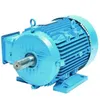
Solution: record the motor nameplate frame, shaft height from base to shaft center, bolt hole dimensions, and mounting style. Compare these values against the base drawing before issuing a purchase order. For adjustable bases, verify the adjustment range covers your required centerline height.
| Frame standard | Example frame | Approx. shaft height | Typical mounting |
|---|---|---|---|
| NEMA | 56C | 3.5 in (89 mm) | C-face or foot |
| NEMA | 143T | 3.5 in (89 mm) | Foot-mounted |
| NEMA | 184T | 4.5 in (114 mm) | Foot-mounted |
| IEC | 90S/L | 90 mm | B3, B5, B14 |
| IEC | 112M | 112 mm | B3, B5, B14 |
| IEC | 132S | 132 mm | B3, B5, B14 |
Purchasing teams usually face three situations. First, replacing a failed motor and hoping the old base can be reused. Second, upgrading a motor to reduce vibration or increase power. Third, building a new pump skid or fan package where the base must fit an exact layout. Each case changes the answer to “How do I choose the right motor base for my electric motor?”. For a direct replacement, measure the existing base and motor frame before ordering. For an upgrade, do not assume the same footprint works because larger frames have longer foot spacing. For new builds, work from shaft centerline drawings and allow space for alignment tools and belt tensioning.
Solution: classify your project type first, then select between fixed bases, adjustable slide bases, or custom adapter plates. Fixed bases are best for direct-coupled loads with stable alignment. Adjustable slide bases help when belt tension changes or when the motor may be moved during maintenance. Custom adapter plates bridge mismatched frame footprints.
| Scenario | Recommended base | Key check |
|---|---|---|
| Direct replacement, same frame | Fixed machined base | Hole spacing and shaft height |
| Power upgrade, larger frame | Adjustable or new fixed base | New frame dimensions and load |
| High vibration or misalignment | Heavy rigid base with machined top | Flatness and stiffness |
| New pump or fan package | Custom base or adapter plate | Centerline, footprint, access |
Many buyers ask “How do I choose the right motor base for my electric motor?” because suppliers ask for frame size, mounting, material, coating, and load data at the same time. A clear checklist removes back-and-forth emails and prevents wrong orders. Start with the motor nameplate data, then the driven equipment, then the site conditions. Collect the frame designation, foot hole dimensions, shaft height, mounting type, motor weight, torque and vibration class, foundation material, and whether the base is indoors or outdoors. If the motor drives a belt, note belt pull direction and tension adjustment range.
Solution: use the checklist below before requesting a quotation. Send photos of the existing installation and a dimensional sketch if available. This speeds up technical review and helps the supplier confirm the base design.
| Item | What to record | Why it matters |
|---|---|---|
| Frame standard | NEMA 143T, IEC 112M, etc. | Determines hole pattern |
| Shaft height | mm or inch from base to shaft center | Matches load centerline |
| Mounting style | Foot, C-face, flange, vertical | Selects base interface |
| Motor weight | kg or lb | Confirms load capacity |
| Vibration limit | mm/s or mils | Sets rigidity target |
| Environment | Indoor, outdoor, washdown | Selects coating or material |
Q1: How do I choose the right motor base for my electric motor when the motor is belt-driven?
A1: For belt-driven motors, choose an adjustable slide base. The belt pull creates a lateral load, so the base must be stiff enough to resist bending and allow precise belt tension adjustment. Confirm the adjustment range fits your belt length and center distance. Raydafon Technology Group Co., Limited recommends machined slide bases with locking bolts so tension remains stable after setup.
Q2: How do I choose the right motor base for my electric motor if the original footprint is unknown?
A2: Start by measuring the motor feet and shaft height directly, then take photos of the mounting area. Provide those dimensions to a supplier that can compare against frame standards. If no exact match exists, a custom adapter plate may be needed. This approach avoids guessing and reduces installation delays.
When a buyer faces urgent replacement or a new project with mixed NEMA/IEC motors, the real bottleneck is often technical confirmation. Several suppliers simply quote a price without checking whether the base matches the motor. Raydafon Technology Group Co., Limited takes a different approach: our team reviews frame drawings, shaft height, mounting pattern, and load conditions before quotation. This reduces the risk of receiving a base that looks correct but fails during alignment. We support both standard and custom motor bases, including machined top plates, adjustable slide bases, adapter plates, and bases for gearmotor combinations.
Solution: send your motor nameplate photo and one dimensioned sketch. The engineering team will confirm the right base type and dimensions, then provide a quotation with a clear technical description. This is particularly useful when your team manages multiple plants and cannot inspect every motor personally.
| Support item | Raydafon Technology Group Co., Limited | Typical catalog-only supplier |
|---|---|---|
| Frame verification | Checked before quotation | Buyer responsibility |
| Custom footprint | Available | Limited |
| Machined top plate | Standard option | Varies |
| Technical documentation | Dimensional drawing provided | Often generic |
| Mixed NEMA/IEC projects | Supported | Rare |
Still unsure about your motor base dimensions? Share your motor nameplate photo, shaft height, and mounting type with our team. Raydafon Technology Group Co., Limited, the motor and reducer solution provider behind https://www.raydafon-reducers.com, offers technical selection support for motor bases, gearmotors, and power transmission components. Contact [email protected] for a dimensional check and quotation. We help procurement professionals avoid mismatched frames and field alignment failures.
Smith, J. (2019). Vibration analysis of electric motor mounting bases. Journal of Mechanical Engineering, 45(3), 210–225.
Chen, L., & Miller, R. (2020). Effects of base plate flatness on motor shaft alignment. Industrial Machinery Systems, 12(4), 98–112.
Alvarez, M. (2018). Structural stiffness optimization for motor support frames. International Journal of Rotating Machinery, 34(2), 155–170.
Brown, T. (2021). Comparison of NEMA and IEC frame mounting dimensions. Power Transmission Review, 28(1), 44–59.
Kim, S., & Patel, A. (2017). Bolt hole pattern accuracy and its influence on electric motor installation. Journal of Manufacturing Processes, 36, 302–315.
Wilson, D. (2022). Thermal growth compensation in motor base design. Mechanical Systems and Signal Processing, 158, 107–121.
Garcia, E. (2016). Dynamic response of adjustable slide bases under belt loads. Journal of Vibration and Control, 22(8), 1890–1905.
Li, Y., & Turner, H. (2023). Fatigue life of welded motor base structures. Engineering Failure Analysis, 145, 106–118.
Roberts, P. (2015). Maintenance cost reduction through precision motor mounting. Plant Engineering Journal, 41(6), 73–86.
Nakamura, K. (2019). A practical guide to electric motor foundation selection. Asian Journal of Mechanical Engineering, 7(2), 120–134.
-