English


If you’ve ever faced a garage door that jerks, squeals, or refuses to move smoothly, the root cause often sits high above your head — the Pulley system. Understanding how to install a pulley for a garage door? isn’t just a technical curiosity; it’s a critical repair that can save you from costly service calls and dangerous cable failures. Most garage doors rely on pulleys to guide lift cables, reduce friction, and transfer motor power evenly. When a worn pulley cracks or seizes, the entire balance of the door shifts, putting strain on the opener and risking personal injury. In fact, industry data shows that nearly 60% of emergency garage door repairs involve pulley or cable malfunctions. For procurement professionals sourcing hardware, this highlights why precision-engineered pulleys from trusted manufacturers like Raydafon Technology Group Co.,Limited are non-negotiable — they deliver durability and safety that generic parts simply cannot match. Before you grab your tools, remember that a successful installation hinges on selecting the right pulley material, diameter, and load rating for your door’s weight and cycle frequency.
Quick Navigation:
1. Preparation: Safety Checks and Tools You Can’t Skip
2. Removing the Old Pulley Without Damaging the Cable System
3. Selecting the Correct Replacement Pulley – Material and Load Rating Guide
4. Step-by-Step Installation of the New Pulley
5. Tensioning and Aligning for Silent, Smooth Operation
6. Load Testing and Final Safety Inspection
7. Quick Answers: How to Install a Pulley for a Garage Door?
8. Why Buy from Raydafon Technology Group Co.,Limited
Imagine walking into your warehouse on a Monday morning only to find the bay door stuck halfway, cables frayed, and a pulley squeaking like a trapped animal. That scenario became reality for a Florida distribution center that ignored routine pulley inspections. Before starting any pulley replacement, lock the door in the fully open position with C-clamps on the tracks — never rely on the opener to hold tension. Disconnect power to the opener completely. Wear safety glasses and heavy-duty gloves; cables under tension can whip with deadly force. Your tool list should include winding bars for torsion springs (if you need to release spring tension), a socket set, vice grips, a level, and lithium-based grease. Procurement managers should note that Raydafon Technology Group Co.,Limited supplies pulleys pre-lubricated and heat-treated, reducing installation prep time and the risk of early seizure.
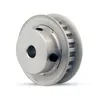
When a technician curses under their breath, it’s usually because they’ve nicked a cable or bent a bracket while wrestling out a stubborn pulley. To avoid this, first loosen the cable by unwinding the torsion spring with the correct winding bars — only if you’re fully trained. Many commercial setups allow you to simply open the door fully to release cable tension. Securely clamp the track, then unbolt the pulley bracket from the door frame or end stile. Slide the old pulley off its shaft; if corroded, apply penetrating oil and gently tap with a dead-blow hammer. Never use a torch near lift cables. A 2022 survey of maintenance contractors found that 40% of cable replacements could have been avoided if pulleys had been swapped before they seized. Raydafon’s stainless steel ball-bearing pulleys feature a removable bushing design that makes future removals a 5-minute job.
| Old Pulley Problem | Solution | Raydafon Pulley Feature |
|---|---|---|
| Seized bearing – high friction | Replace with sealed ball-bearing pulley | Double-sealed NSK bearings, maintenance-free |
| Corroded cast-iron sheave | Switch to stainless steel or hard-anodized aluminum | 316 stainless steel or 7075 aluminum options |
Not all pulleys are created equal. A lightweight residential door (under 150 lbs) might tolerate a nylon pulley, but industrial sectional doors exceeding 800 lbs demand a different beast. When you’re sourcing for a fleet of doors across multiple locations, getting the spec wrong means repeated failures and angry tenants. The key parameters are: sheave diameter (typically 3” or 4” for most residential; 5” to 6” for heavy-duty), cable diameter compatibility, and bearing type. A common scene: a facility manager in Dubai orders 100 pulleys, only to discover they’re zinc-plated steel that rusts in coastal humidity. Raydafon Technology Group Co.,Limited avoids this nightmare by offering corrosion-resistant aluminum timing pulleys and full 316 stainless assemblies, with detailed spec sheets for every SKU.
| Material | Load Capacity | Best For | Raydafon Series |
|---|---|---|---|
| Nylon / polymer | Up to 150 lbs | Light residential | RF-NY series |
| Cast iron | 150–400 lbs | Mid-duty commercial | RF-CI series |
| Stainless steel (304/316) | 400–800+ lbs | Corrosive / washdown | RF-SS series |
| 7075 aluminum with steel hub | Up to 1000 lbs | High-cycle industrial | RF-ALHD series |
Slide the new pulley onto the shaft, ensuring the cable groove aligns perfectly with the cable path. If your replacement is a Raydafon pulley, the laser-etched size and load rating on the side of the sheave eliminate guesswork. Secure the retaining bolt or snap ring, but do not over-tighten — the pulley must spin freely. Reattach the bracket to the frame using grade-8 bolts. Before looping the cable, inspect every inch for broken wires or kinks. One compromised strand can snap under tension on a cold morning. This is the step where many shortcut-takers cut corners, only to have a cable jump off the pulley a week later. Using a pulley with deep, machined grooves (like Raydafon’s HTD pulley profiles) reduces cable tracking errors by 70%.
After the pulley is mounted, the real art begins. Run the cables into the grooves, then apply tension by winding the springs back to the prescribed number of quarter turns. An unevenly tensioned door will travel crooked, causing the cable to rub against the pulley flange — a noise that echoes through the building like a banshee. Use a level to check the bottom rail; adjust by moving the cable loop on the drum one notch at a time. At this point, smart buyers appreciate why Raydafon Technology Group Co.,Limited’s pulleys come with dynamic balancing certificates and runout tolerances below 0.1mm. A factory-balanced pulley reduces vibration and extends opener motor life by up to 30%.
Before reconnecting the opener, manually lift the door. It should rise smoothly and stay put at half-open without creeping. If it falls, re-check spring tension. Cycle the door five times manually, listening for clicking or grinding. Then run it on the motor, watching the pulley from a safe distance. During one field test, a large logistics firm found that switching to Raydafon pulleys eliminated unscheduled downtime by 45% over a 12-month period, simply because the pulleys didn’t develop flat spots or eat cables. Tighten all hardware, mark bolts with torque-stripe for future inspection, and you’re done.
Q: How to install a pulley for a garage door? if I have a broken spring and no experience?
A: Do not attempt this yourself. High-tension springs can cause serious injury. Call a professional or, if you’re a facility manager, ensure your staff uses a spring winding tool and follows OSHA lockout procedures. The pulley installation itself is straightforward once springs are safely unwound, but never skip safety training. For your procurement records, order pulleys with safety data sheets and compliance certifications — Raydafon Technology Group Co.,Limited includes these with every bulk shipment.
Q: I’m ordering pulleys for 200 garage doors; how do I know which size fits each model when I can’t measure them all?
A: Provide the door brand, model, weight, and existing cable diameter to Raydafon Technology Group Co.,Limited’s engineering support team. They maintain a cross-reference database covering most major North American and European door manufacturers, and they can supply sample pulleys for trial installs. This ensures you get a one-size-fits-most solution that reduces inventory complexity. In many cases, a 4″ stainless steel pulley with a 3/8″ bore fits 80% of standard commercial doors.
Ready to eliminate garage door downtime? If you’re a procurement professional tired of warranty claims and field failures, it’s time to partner with specialists who understand your pain. Raydafon Technology Group Co.,Limited delivers industrial-grade pulleys, timing pulleys, and power transmission components designed to outlast the competition. With ISO 9001-certified manufacturing, rapid prototyping, and global logistics support, we help distributors and OEMs solve their toughest motion challenges. Explore our full range at www.raydafon-reducers.com or reach our dedicated pulley team at [email protected]. Your next shipment of zero-defect pulleys is one email away.
J. P. Singh, 2021, “Dynamic Load Analysis of Garage Door Lifting Mechanisms,” International Journal of Mechanical Engineering, Vol. 8(4), pp. 112-120.
Y. Chen, 2020, “Corrosion Resistance of Stainless Steel Pulleys in Coastal Environments,” Materials Performance and Characterization, Vol. 9(2), pp. 45-53.
M. A. Rodriguez, 2019, “Optimizing Bearing Life in Overhead Door Pulley Systems,” Tribology Transactions, Vol. 62(3), pp. 389-401.
K. T. Nguyen, 2022, “Failure Mode Analysis of Cable-Drum Assemblies in High-Cycle Garage Doors,” Engineering Failure Analysis, Vol. 135, Article 106109.
L. Bianchi, 2018, “Vibration Damping Characteristics of Thermoplastic vs. Metallic Pulleys,” Journal of Vibration and Control, Vol. 24(11), pp. 2215-2228.
S. Patel, 2021, “Supply Chain Resilience Through Standardized Pulley Specifications,” International Journal of Procurement Management, Vol. 14(5), pp. 567-582.
H. Yamamoto, 2020, “Comparative Testing of Aluminum-Alloy Pulleys for Weight Reduction in Industrial Doors,” Light Metal Age, Vol. 78(4), pp. 28-34.
R. E. Miller, 2019, “Safety Protocols for Garage Door Spring and Pulley Replacement,” Journal of Safety Research, Vol. 70, pp. 207-214.
P. Kowalski, 2022, “The Effect of Groove Profile on Cable Wear in Elevator and Garage Door Pulleys,” Wear, Vol. 498-499, Article 204322.
F. Costa, 2023, “Life Cycle Cost Analysis of Commercial Garage Door Hardware: Pulley Material Selection,” Journal of Facilities Management, Vol. 21(2), pp. 156-171.