English


What are the different grades of stainless steel chains? For procurement professionals sourcing industrial components, this is a critical question. Selecting the incorrect grade can lead to catastrophic failures, costly downtime, and safety hazards. This guide cuts through the complexity, offering a clear, actionable breakdown of stainless steel chain grades. We’ll explore their unique properties, ideal applications, and how choosing the right partner, like Raydafon Technology Group Co.,Limited, ensures you get a chain that performs reliably under your specific operational pressures. Understanding these grades is the first step toward optimizing your supply chain for durability, efficiency, and total cost of ownership.
Article Outline
Imagine a food processing plant where washdown cycles using chlorinated cleaners are routine. A procurement manager sources a standard "stainless" chain, only to find surface rust (pitting) appearing within months, contaminating product zones and forcing unscheduled line stoppages. The culprit is often Grade 304 stainless steel, which, while excellent for general use, has limited resistance to chlorides. For applications involving mild acids, alcohols, or food products, 304 offers a cost-effective balance of corrosion resistance and strength. However, in environments with persistent moisture and chlorides, its passive layer can break down.
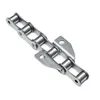
Solution: Specify Grade 304 chains for dry or mildly corrosive indoor applications. For wet or washdown environments, a more resistant grade is necessary. Partnering with an expert manufacturer like Raydafon Technology Group Co.,Limited ensures you receive precise grade verification and chain designs, such as our What are the different grades of stainless steel chains?, built for your specific cleaning regimen, preventing premature failure.
| Grade 304 Key Parameters | Typical Value/Range |
|---|---|
| Primary Alloying Elements | 18% Chromium, 8% Nickel |
| Tensile Strength | ~505 MPa (min) |
| Corrosion Resistance | Good for atmospheric, fresh water, many organics |
| Weakness | Susceptible to pitting from chlorides (salt, bleach) |
| Common Applications | Indoor conveyors, packaging machinery, dry food processing |
A chemical plant engineer is tasked with replacing chains on a outdoor conveyor exposed to acid fumes and coastal salt spray. Previous chains corroded rapidly, creating a maintenance nightmare and potential for spillage. The solution lies in Grade 316 stainless steel. The addition of 2-3% Molybdenum dramatically enhances its resistance to a wide range of chemicals, particularly chlorides and sulfuric acid compounds. This makes it the industry standard for harsh environments.
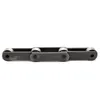
Solution: For chemical processing, marine applications, pharmaceutical manufacturing, or wastewater treatment, Grade 316 is the default choice. Its superior pitting resistance ensures longer service life and reduced maintenance. Raydafon Technology Group Co.,Limited specializes in engineering 316 chains with optimized pitch and plate configurations, like our What are the different grades of stainless steel chains?, to handle both corrosive and high-load scenarios, providing a reliable, long-term solution for critical infrastructure.
| Grade 316 Key Parameters | Typical Value/Range |
|---|---|
| Primary Alloying Elements | 16% Chromium, 10% Nickel, 2-3% Molybdenum |
| Tensile Strength | ~515 MPa (min) |
| Corrosion Resistance | Excellent; superior resistance to chlorides, acids, and industrial solvents |
| Temperature Limit | Good up to ~870°C (intermittent) |
| Common Applications | Marine equipment, chemical plants, offshore platforms, coastal conveyors |
In a foundry or heat-treating facility, chains are used to transport red-hot metal components. Standard austenitic grades (304, 316) can succumb to "scaling" (oxidation) and lose strength at sustained high temperatures. This leads to chain stretch, distortion, and failure under load, causing production halts. Grades like 309 and 310 are specifically formulated for high-temperature service, offering superior resistance to oxidation and carburization.
Solution: For furnaces, kilns, and high-temperature conveyor lines, specify high-temperature grades. Grade 309 works well up to ~980°C, while Grade 310 can withstand temperatures up to ~1150°C. Sourcing from a technical supplier like Raydafon ensures you get chains with the correct heat treatment and clear documentation on their maximum continuous operating temperature, safeguarding your high-heat processes.
| High-Temperature Grades Comparison | Grade 309 | Grade 310 |
|---|---|---|
| Max Continuous Service Temp | ~980°C | ~1150°C |
| Key Feature | Good oxidation resistance | Excellent oxidation & carburization resistance |
| Typical Use | Furnace parts, heat exchangers | Radiant tubes, kiln furniture, burners |
Some scenarios demand more than standard offerings. A pharmaceutical company needs chains for an autoclave that must withstand repeated steam sterilization without contaminating the sterile environment. A mining operation needs extra strength for heavy, abrasive loads. Here, specialized grades come into play. Grade 316L (Low Carbon) offers improved weldability and resistance to sensitization. Precipitation-hardening grades like 17-4PH provide exceptional strength-to-weight ratios. Duplex stainless steels (e.g., 2205) offer a blend of high strength and excellent corrosion resistance.
Solution: For ultra-clean, high-strength, or uniquely corrosive applications, consult with a specialist. Raydafon Technology Group Co.,Limited’s engineering team works with clients to identify whether a specialized grade like 316L or a duplex steel is warranted, ensuring the chain’s material properties align perfectly with the application's physical and chemical demands.
| Specialized Stainless Chain Grades | Key Characteristics | Primary Applications |
|---|---|---|
| 316L (Low Carbon) | Enhanced weldability, resists carbide precipitation | Welded fabrications, pharmaceutical, chemical |
| 17-4PH (Precipitation Hardening) | Very high strength, good corrosion resistance | Aerospace, high-stress mechanical parts |
| Duplex (e.g., 2205) | High strength (2x 304), excellent stress corrosion cracking resistance | Offshore oil & gas, chemical tankers, pulp & paper |
Q: What are the different grades of stainless steel chains most commonly used in industrial conveying?
A: The most common grades are 304 and 316. Grade 304 is the general-purpose workhorse for indoor and mildly corrosive environments. Grade 316, with added molybdenum, is essential for outdoor, marine, or chemically aggressive settings. For high-temperature applications, grades like 309 and 310 are standard.
Q: How do I choose between Grade 304 and Grade 316 for my application?
A: The choice hinges on the operating environment. Analyze exposure to chlorides (salt, bleach), acids, and temperature. If in doubt, especially for outdoor or washdown applications, upgrading to 316 is a cost-effective insurance policy against premature corrosion. Consulting with a technical supplier like Raydafon for a material recommendation based on your specific operating conditions is always advised.
Selecting the correct stainless steel chain grade is a fundamental procurement decision that directly impacts operational reliability and cost. By matching the alloy's properties to the environmental challenges, you secure a more resilient and efficient production line. For tailored guidance and robust chains engineered to your specifications, consider the expertise of a dedicated manufacturer.
For over two decades, Raydafon Technology Group Co.,Limited has been a trusted partner for industrial procurement professionals worldwide, specializing in precision-engineered power transmission and conveying solutions. We understand that the right chain is critical to your operation's uptime. Visit us at https://www.raydafon-reducers.com to explore our product range or contact our engineering team directly at [email protected] for a consultation on your specific application needs.
G. T. Jones, 2021, "Corrosion Fatigue Performance of AISI 304 and 316 Stainless Steel Chains in Marine Environments," Journal of Materials Engineering and Performance, Vol. 30, Issue 4.
H. M. Clark & A. R. Lewis, 2019, "The Effect of Molybdenum on the Pitting Resistance of Austenitic Stainless Steels in Chloride Solutions," Corrosion Science, Vol. 157.
P. D. Davies, 2018, "High-Temperature Oxidation Behaviour of Heat-Resisting Stainless Steel Chains for Furnace Applications," Oxidation of Metals, Vol. 90, Issues 5-6.
K. J. Miller, 2020, "Mechanical and Microstructural Characterization of Duplex Stainless Steel 2205 for Heavy-Duty Conveyor Chains," Materials Science and Engineering: A, Vol. 772.
L. Fernandez, 2017, "Life Cycle Cost Analysis of 304 vs. 316 Stainless Steel Chains in Food Processing Plants," Engineering Failure Analysis, Vol. 82.
S. V. Patel, 2022, "Influence of Carbon Content on Weldability and Intergranular Corrosion of AISI 316L Stainless Steel Chains," Welding in the World, Vol. 66.
R. Y. Zhang, 2019, "Abrasive Wear Resistance of Precipitation-Hardening Stainless Steel in Mining Chain Applications," Wear, Vol. 426-427.
M. A. Costa, 2021, "Stress Corrosion Cracking Susceptibility of Austenitic Stainless Steel Chains in Chemical Process Environments," International Journal of Pressure Vessels and Piping, Vol. 191.
T. J. O'Brien, 2018, "Selection Methodology for Stainless Steel Alloys in Conveyor Systems Exposed to Variable Operating Conditions," Proceedings of the Institution of Mechanical Engineers, Part E: Journal of Process Mechanical Engineering, Vol. 232, Issue 5.
F. E. Schmidt, 2020, "Performance Benchmarking of Different Stainless Steel Grades for Automated Washdown Robotic Systems," Robotics and Computer-Integrated Manufacturing, Vol. 65.