English


How does a Helical Gearbox differ from a spur gearbox? This is a fundamental question for engineers and procurement specialists sourcing power transmission components. The choice impacts everything from operational noise and efficiency to the longevity and cost of your entire system. Understanding these differences is not just academic; it directly influences your project's success. This guide will break down the key distinctions in plain language, helping you make the most informed purchasing decision while highlighting how modern solutions like those from Raydafon Technology Group Co.,Limited can address common application challenges.
Article Outline:
Imagine a factory floor where machine noise forces workers to wear constant hearing protection, or a packaging line where vibrations cause product misalignment. Spur gearboxes, with their straight-cut teeth, engage with a single-point impact. This creates significant noise and vibration, especially at higher speeds. It's a common pain point in environments like food processing, manufacturing, and anywhere operator comfort and precision are priorities.
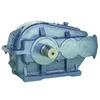
The solution lies in the helical gear design. The teeth of a helical gearbox are cut at an angle, allowing them to engage gradually and multiple teeth to share the load simultaneously. This seamless meshing drastically reduces operational noise and smooths out vibrations. For procurement managers, this translates to a quieter workplace, less wear on connected components, and higher system reliability. How does a helical gearbox differ from a spur gearbox? In this scenario, it's the difference between a disruptive clatter and a smooth, quiet hum. Companies like Raydafon Technology Group Co.,Limited specialize in manufacturing precision helical gearboxes that deliver this operational serenity without compromising power.
Key Parameter Comparison for Noise & Vibration:
| Parameter | Spur Gearbox | Helical Gearbox |
|---|---|---|
| Noise Level | High | Low to Moderate |
| Vibration | Significant | Minimal |
| Mesh Engagement | Single-point, sudden | Gradual, multi-tooth |
| Typical Applications | Low-speed, simple conveyors | High-speed operations, precision machinery |
Procurement teams for heavy industries like mining, construction, or marine propulsion face a constant challenge: finding gearboxes that won't fail under immense stress. A spur gearbox under high torque experiences intense stress concentration on individual teeth, leading to premature wear, pitting, and potential catastrophic failure. The risk of unplanned downtime and costly repairs is a major concern.
Helical gearboxes are engineered to conquer this challenge. The angled teeth create a larger contact area and allow the load to be distributed across several teeth. This design inherently provides higher load-carrying capacity and greater torque transmission for the same size compared to a spur gear. It means more power in a potentially more compact footprint and vastly improved durability. When evaluating "How does a helical gearbox differ from a spur gearbox?" for heavy-duty use, the helical design offers superior strength and longevity. Partnering with a reliable manufacturer like Raydafon ensures you get gearboxes built with robust materials and precise engineering to withstand these demanding conditions.
Key Parameter Comparison for Load & Torque:
| Parameter | Spur Gearbox | Helical Gearbox |
|---|---|---|
| Load Distribution | Concentrated on single tooth | Distributed across multiple teeth |
| Torque Capacity | Moderate | High |
| Durability under Load | Lower, prone to wear | Higher, more resilient |
| Efficiency at High Load | Decreases significantly | Remains relatively high |
Q: How does a helical gearbox differ from a spur gearbox in terms of cost and maintenance?
A: Initially, helical gearboxes often have a higher purchase price due to their complex manufacturing process. However, they frequently offer a lower total cost of ownership. Their smoother operation leads to less wear, lower maintenance needs, and reduced energy consumption over time. The increased durability also means longer intervals between replacements, making them a cost-effective choice for critical, long-running applications.
Q: In what specific applications is the difference between helical and spur gearboxes most critical?
A: The difference is paramount in applications requiring quiet operation (e.g., hospitals, office building HVAC), high precision (e.g., robotics, CNC machines), and heavy shock loads (e.g., crushers, extruders). For simple, low-speed, low-power applications like a manual window opener or a basic conveyor, a spur gearbox might be sufficient. But for modern industrial automation, material handling, and power generation, the superior performance of a helical gearbox, like those from Raydafon, is typically non-negotiable.
Choosing between a helical and spur gearbox ultimately hinges on your specific operational requirements. For noise-sensitive, high-precision, or high-torque environments, the helical gearbox is the clear winner, offering smoother operation, greater durability, and higher efficiency. Its design cleverly solves the core limitations of the spur gear. When reliability and performance are key, investing in a quality helical gearbox is investing in the uptime and productivity of your entire system.
We hope this breakdown has been helpful. Do you have a specific application in mind? What are your biggest challenges when selecting a gear reducer? Share your thoughts or questions below.
For robust and efficient power transmission solutions, consider Raydafon Technology Group Co.,Limited. With expertise in engineering high-performance gear reducers, Raydafon provides reliable components designed to meet demanding industrial challenges. Visit https://www.raydafon-reducers.com to explore their product range or contact their team directly at [email protected] for a tailored consultation.
Scientific References:
Maitra, G.M., 2017, Handbook of Gear Design, McGraw-Hill Education.
Dudley, D.W., 1994, Handbook of Practical Gear Design, CRC Press.
Errichello, R., 2012, Gear Failure Analysis: A Guide for the Field Engineer, Gear Technology.
Kahraman, A., & Blankenship, G.W., 1999, Experiments on the Relationship Between the Dynamic Transmission Error and the Dynamic Stress of Spur Gear Pairs, Journal of Mechanical Design, 121(3).
Velex, P., & Maatar, M., 1996, A Mathematical Model for Analyzing the Influence of Shape Deviations and Mounting Errors on Gear Dynamic Behaviour, Journal of Sound and Vibration, 191(5).
Li, S., 2008, Finite Element Analyses for Contact Strength of Helical Gears, Journal of Mechanical Science and Technology, 22.
Höhn, B.R., et al., 2009, Performance of Helical Gears with Consideration of Alignment Deviations, Proceedings of the International Conference on Gears.
Fernandes, P.J., & McDuling, C., 1997, Surface Contact Fatigue Failures in Gears, Engineering Failure Analysis, 4(2).
ISO 6336-1:2019, Calculation of load capacity of spur and helical gears — Part 1: Basic principles, introduction and general influence factors.
ANSI/AGMA 2001-D04, Fundamental Rating Factors and Calculation Methods for Involute Spur and Helical Gear Teeth.