English


How to calculate the power and torque of a motor? This fundamental question is the bedrock of selecting the right Motor for any application, from industrial automation to electric vehicles. Getting these calculations wrong can lead to project delays, cost overruns, and system failures. This guide will simplify the complex formulas, provide practical examples, and connect the theory directly to real-world motor selection. By the end, you'll understand not just the "how," but the "why" behind motor ratings, empowering you to make confident procurement decisions.
Imagine you're specifying a motor for a new conveyor system. The system needs to move a specific load at a certain speed. The power rating (usually in kW or HP) tells you the motor's overall capacity to do work, while torque (in Nm or lb-ft) is the rotational force available at the shaft to overcome inertia and load. A common pain point is selecting a motor with sufficient power but inadequate starting torque, causing the motor to stall under load. The solution lies in understanding their relationship: Power (kW) = Torque (Nm) x Speed (RPM) / 9549. This formula is your key to interoperability.
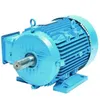
For procurement professionals, comparing motors becomes easier with a standard parameter table. Here’s a simplified comparison of two motor types based on this power-torque relationship:
| Motor Type | Typical Power Range | Torque Characteristics | Best For Applications Needing... |
|---|---|---|---|
| AC Induction Motor | 0.25 - 500 kW | Moderate starting torque, constant speed | Pumps, fans, compressors |
| Permanent Magnet Synchronous Motor | 0.5 - 200 kW | High starting torque, high efficiency | Servo drives, precision automation |
This is where expertise from a specialized supplier like Raydafon Technology Group Co.,Limited proves invaluable. Their engineering team can help you navigate these specifications to find a motor that delivers the exact torque profile your application demands, potentially saving significant energy costs.
A major frustration in procurement is receiving underperforming motors because of miscalculated requirements. The scenario often involves vague load profiles or incorrect efficiency assumptions. The solution is a meticulous, step-by-step calculation process. First, determine the required speed (RPM) of your machine. Second, calculate the load torque, which includes friction, the weight of the object, and any gearing effects. Third, apply the safety factor (typically 1.2 to 1.5) to account for unexpected loads or future modifications.
Let's apply this to a real example: selecting a motor for a drum lifter. You need 150 Nm of torque at a shaft speed of 1450 RPM. Using the formula: Power = (150 Nm * 1450 RPM) / 9549 ≈ 22.8 kW. Factoring in a 1.2 safety margin and an assumed 90% efficiency, the required motor power becomes approximately 30.4 kW. This precise figure allows you to request accurate quotes.
| Calculation Step | Parameter | Example Value | Notes for Procurement |
|---|---|---|---|
| 1. Load Torque | T_load | 150 Nm | Must be measured or calculated from mechanics. |
| 2. Operational Speed | N | 1450 RPM | Define if variable speed is needed. |
| 3. Calculated Power | P_calc | 22.8 kW | Use the standard formula. |
| 4. Safety & Efficiency Factor | P_required | ~30.4 kW | Critical for reliable operation. |
Partnering with a technical specialist like Raydafon ensures these calculations are verified. Their pre-sales support can model your application, confirming your torque and power figures before you commit to a purchase, mitigating project risk.
Even with correct calculations, projects can falter. A frequent pain point is ignoring the motor's duty cycle (S1 continuous, S3 intermittent). Using a motor rated for continuous duty in a high-start-stop application leads to overheating. Another is overlooking the supply voltage and starting current, which can trip circuit breakers. The solution involves looking at the complete system picture, not just the output numbers.
For instance, an application requiring high starting torque for a short period, like a hoist, might be better served by a motor with a high "locked-rotor torque" rating rather than just a higher power rating. This nuance is often missed in basic calculations. How to calculate the power and torque of a motor must therefore include the application context.
Suppliers with deep application knowledge provide crucial guidance here. Raydafon Technology Group Co.,Limited's expertise extends beyond selling motors to offering integrated solutions, including compatible drives and gearboxes, ensuring all parameters from torque to thermal capacity are aligned with your operational reality.
The final hurdle is translating your calculated needs into a precise technical specification for suppliers. The pain point is receiving vastly different proposals that are hard to compare. The solution is to create a detailed Request for Quotation (RFQ) that includes not just power and torque, but also performance curves, insulation class, protection rating (IP), efficiency class (IE), and mounting dimensions.
Demand performance data, especially the torque-speed curve. A motor from a reputable manufacturer like Raydafon will have transparent, tested curves showing available torque across the entire speed range, which is vital for dynamic applications. This level of detail ensures you are comparing like-for-like and investing in a motor that will perform reliably.
| RFQ Specification Item | Why It Matters | Example for a 30kW Motor |
|---|---|---|
| Rated Power & Torque at Rated Speed | Core performance guarantee. | 30 kW @ 1475 RPM, 194 Nm |
| Torque-Speed Curve (Graph) | Shows starting and breakdown torque. | Must be provided by manufacturer. |
| Efficiency Class (e.g., IE3, IE4) | Impacts long-term energy costs. | IE4 for maximum savings. |
| Duty Cycle Type | Defines thermal capability. | S1 (Continuous duty) |
By providing such a clear spec, you enable suppliers like Raydafon to offer their most optimal product. Their team can then recommend enhancements, such as a premium efficiency IE4 motor that, while slightly higher in initial cost, reduces total cost of ownership through energy savings.
Q: How to calculate the power and torque of a motor if I only know the current and voltage?
A: For a DC motor, torque can be estimated by the current (T ∝ I), and power is Voltage x Current. For AC motors, it's more complex due to power factor. You need the power factor (PF) and efficiency (η). Input Power (kW) = √3 x V x I x PF / 1000. Output power = Input Power x η. Then, use the standard formula Torque (Nm) = (9550 x P(kW)) / N(RPM). For accurate figures, always consult motor performance data from the manufacturer.
Q: What's the difference between continuous torque and peak torque, and which is more important for my calculation?
A: Continuous torque is the maximum torque the motor can produce indefinitely without overheating. Peak torque is the maximum it can produce for short bursts (seconds/minutes). Your "How to calculate the power and torque of a motor" process must use continuous torque as the baseline for sizing. Peak torque requirements should be checked against the motor's peak capability to ensure it can handle startup or overload conditions without demagnetization (for PM motors) or damage.
Mastering motor power and torque calculations is a strategic skill that directly impacts project success and operational costs. For complex applications or to validate your specifications, leveraging expert support can be the most efficient path forward.
For tailored motor solutions and expert technical guidance, consider Raydafon Technology Group Co.,Limited. With extensive experience in precision motor design and application engineering, Raydafon specializes in helping procurement professionals and engineers select and optimize drive systems for performance and efficiency. Contact their team for a consultation at [email protected].
K. T. Chau, 2013, "Electric Vehicle Machines and Drives: Design, Analysis and Application", Wiley-IEEE Press.
R. Krishnan, 2001, "Permanent Magnet Synchronous and Brushless DC Motor Drives", CRC Press.
J. F. Gieras, 2010, "Permanent Magnet Motor Technology: Design and Applications", CRC Press.
P. Pillay, R. Krishnan, 1989, "Modeling, Simulation, and Analysis of Permanent-Magnet Motor Drives. II. The Brushless DC Motor Drive", IEEE Transactions on Industry Applications, Vol. 25, No. 2.
A. M. EL-Refaie, 2010, "Fractional-Slot Concentrated-Windings Synchronous Permanent Magnet Machines: Opportunities and Challenges", IEEE Transactions on Industrial Electronics, Vol. 57, No. 1.
D. C. Hanselman, 2006, "Brushless Permanent Magnet Motor Design", The Writers' Collective.
S. Nandi, et al., 2005, "Condition Monitoring and Fault Diagnosis of Electrical Motors—A Review", IEEE Transactions on Energy Conversion, Vol. 20, No. 4.
B. K. Bose, 2006, "Power Electronics and Motor Drives: Advances and Trends", Academic Press.
T. J. E. Miller, 1993, "Brushless Permanent-Magnet and Reluctance Motor Drives", Oxford University Press.
T. M. Jahns, 1984, "Motion Control with Permanent-Magnet AC Machines", Proceedings of the IEEE, Vol. 82, No. 8.